Semi-Automated Offside Explained: What 4 Years Taught Me
Semi-automated offside technology, or SAOT, is a football officiating support system that helps VAR teams identify possible offside offences faster and more consistently. FIFA introduced it at the 202...

Semi-Automated Offside Explained: What 4 Years Taught Me
Semi-automated offside technology, or SAOT, is a football officiating support system that helps VAR teams identify possible offside offences faster and more consistently. FIFA introduced it at the 2022 FIFA World Cup in Qatar, using player-tracking cameras, artificial intelligence and, in the newest configuration, connected-ball data to identify player positions when the ball is played. SAOT does not replace the referee: match officials still review the evidence and confirm the final decision under Law 11 of the Laws of the Game. FIFA’s system can track up to 29 body points per player, while the 2022 tournament used 12 dedicated cameras and a sensor inside the official match ball. UEFA competitions, the AFC Asian Cup, the FA Cup and the Premier League have since adopted or introduced comparable systems. The practical takeaway is simple: treat SAOT as a faster evidence tool, not an automated referee.
Imagine a decisive World Cup goal celebrated by thousands of supporters, only for the assistant referee to raise a flag several seconds later. Then imagine the same moment being assessed with a precisely synchronized frame, a computer-generated offside line and a clear visual explanation on the stadium screen. That is the promise of semi-automated offside technology, and it is considerably more serious than the usual television graphics dressed up as futuristic wizardry. Stadium View follows this technology because it affects match predictions, tactical analysis, player statistics and the credibility of major tournaments, particularly the 2026 FIFA World Cup across the United States, Canada and Mexico. For a broader understanding of football decision-making, consult our [Internal Link: football rules and VAR guide].
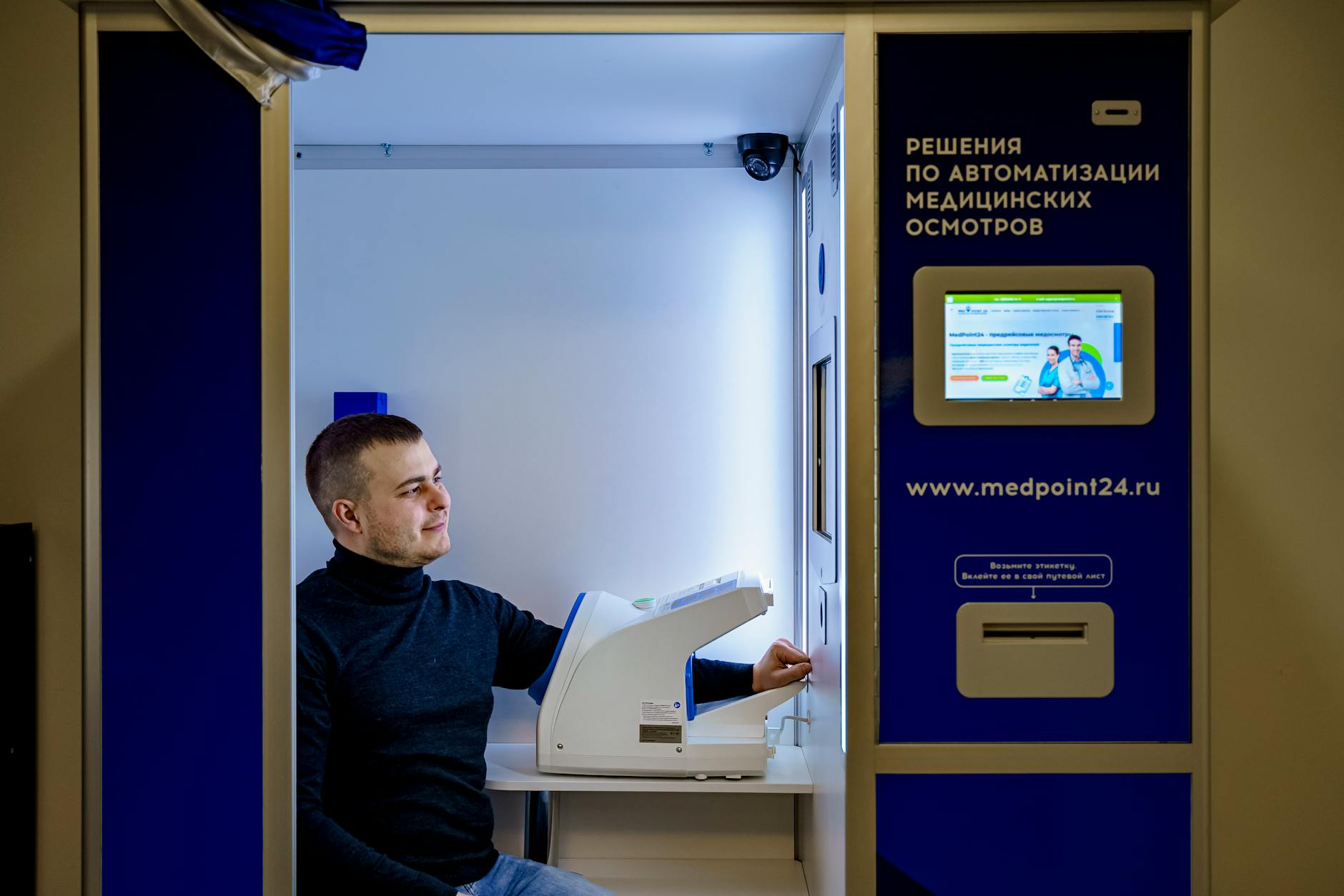
Photo by MedPoint 24 on Pexels
Want the full tournament context and sharper match analysis? Explore the latest coverage.
Myth 1: SAOT makes every offside decision automatically — debunked
Semi-automated offside technology does not independently award a free kick or disallow a goal; it detects, measures and presents a possible offence for human officials to assess. The referee, assistant referee and VAR team remain responsible for applying Law 11, including whether an attacker is interfering with an opponent or gaining an advantage.
The word “semi” is doing heavy lifting here, and apparently some viewers still refuse to notice it. SAOT combines automated tracking with human judgment. Cameras follow players and identify relevant body points, while software determines the likely moment the ball was played and calculates the attacker’s relationship to the second-last defender. If the system detects a possible offside, it sends an alert to the VAR operation.
The official must then verify several matters:
- Whether the selected kick point is correct.
- Whether the attacker was in an offside position.
- Whether the player became involved in active play.
- Whether another defender, rebound or deliberate play changes the interpretation.
- Whether the visual evidence is reliable enough to support intervention.
FIFA’s official explanation describes SAOT as a support system rather than a replacement for refereeing judgment. The International Football Association Board remains the authority for the Laws of the Game, while FIFA provides information about football technology and implementation. In other words, the machine measures the geometry; officials interpret the football. That distinction matters when analysing a disputed goal or assessing the reliability of live match data.
Myth 2: SAOT eliminates controversial decisions — partially true
SAOT substantially reduces the time required to review many offside incidents and improves the consistency of line placement, but it cannot remove every controversy because football’s offside law includes subjective judgments. The system is strongest on factual positioning and weaker when officials must decide whether a player interfered with an opponent or challenged for the ball.
The measurable improvement is speed. At the 2022 FIFA World Cup, FIFA reported that the technology could send an offside alert to VAR officials within seconds of the relevant event. The system used 12 dedicated stadium cameras to track 29 data points on each player, while a sensor in the Adidas Al Rihla match ball helped identify the precise kick point. That combination addressed a notorious weakness in ordinary broadcast review: the analyst must decide which video frame represents the instant of contact, often while a moving foot and moving ball create a visual blur.
Here is the operational insight many shallow explainers miss: better positional data does not automatically produce a simpler explanation. A player can be clearly beyond the second-last defender yet remain onside if the ball comes from a deliberate opponent action, subject to the law’s interpretation. Conversely, a player who is not touching the ball may still commit an offence by obstructing an opponent’s line of vision or challenging for possession. SAOT can draw the line; it cannot turn a nuanced law into a children’s colouring book.
For analysts at Stadium View, this means offside technology should be included in match previews without being treated as a guaranteed correction mechanism. High defensive lines, rapid counterattacks and narrow attacking margins deserve attention, but predictions should also account for the referee’s review process and the quality of available camera coverage.

Photo by Rushi Patel on Pexels
Want to understand how technology changes tactical risk? Read our [Internal Link: World Cup tactics and defensive lines analysis].
Myth 3: A drawn offside line proves the attacker was guilty — flat-out false
A rendered offside line is visual evidence, not a verdict by itself, because the final decision depends on the correct frame, the relevant body part, the second-last defender and the player’s involvement in active play. Treating one broadcast graphic as conclusive is how confident people become confidently wrong.
The offside position is generally judged using the attacker’s head, body or feet, excluding the hands and arms, in relation to the ball and the second-last opponent. A player is not automatically penalised merely for standing in an offside position; the offence occurs when that player becomes involved in active play under Law 11. The goalkeeper is often misunderstood here as well. The goalkeeper may be the last or second-last opponent, but the law concerns the two opponents nearest the goal line, not a special “goalkeeper line.”
Camera geometry creates another important edge case. A broadcast angle may make an attacker appear level when the actual three-dimensional relationship is different. SAOT’s multi-camera model helps reconstruct the scene, but tracking quality can still be affected by players being tightly grouped, partially hidden or positioned near the edge of the camera coverage. FIFA’s published technology material therefore presents the system as an assistance tool, not as an infallible oracle descended from the heavens.
A practical review checklist is more useful than shouting at the screen:
- Identify the exact moment the ball was played.
- Locate the attacker’s furthest legal body part.
- Identify the second-last opponent.
- Check whether the player interfered with an opponent or gained an advantage.
- Confirm that the visualisation matches the law, not merely the television narrative.
The Premier League and UEFA have used increasingly advanced offside review systems, but competition protocols can differ in camera infrastructure, stadium integration and communication procedures. That is why one tournament’s graphic should not be assumed to represent every league’s technical standard.
What actually works?
What does SAOT actually measure?
SAOT measures player locations and the ball-play event to assist VAR officials in identifying possible offside offences; it does not independently interpret every element of Law 11. In FIFA’s 2022 system, 12 tracking cameras monitored 29 player data points, with connected-ball information helping locate the kick point.
The process is best understood as a sequence rather than a single magical button:
- Tracking cameras capture player movement throughout the match.
- The system identifies body landmarks, including feet, torso and head positions.
- Ball data helps establish when and where the ball was played.
- Software compares the attacker’s position with the second-last opponent.
- An alert is sent to the VAR team when a possible offside is detected.
- VAR officials review the incident and advise the referee.
- The referee confirms, changes or rejects the proposed decision.
This workflow produces two distinct outputs. The first is an internal alert intended to accelerate review. The second is a three-dimensional animation or replay that helps officials and supporters understand the decision. At the 2022 FIFA World Cup, FIFA used an animated representation to show the relevant players and ball trajectory, making the explanation more transparent than a frozen line on a conventional broadcast.
A practitioner-level point deserves attention: the kick-point timestamp and the offside-line calculation are separate technical problems. Even if player tracking is excellent, a poorly selected contact frame can distort the conclusion. Connected-ball sensors are valuable because they provide additional event data, but human review remains necessary to confirm whether the detected event corresponds to the legally relevant play.
See the technical background in our [Internal Link: VAR technology and football data guide] before judging a marginal call from a single camera angle.
Get the match-data perspective before the next major tournament.
Why does SAOT matter for the 2026 FIFA World Cup?
SAOT matters for the 2026 FIFA World Cup because a larger tournament environment demands faster reviews, clearer communication and dependable technology across venues in the United States, Canada and Mexico. Its greatest value is reducing avoidable delays in factual offside checks while preserving human responsibility for law interpretation.
The 2026 tournament will feature 48 teams and 104 matches, creating a demanding operational environment compared with the 32-team, 64-match format used at Qatar 2022. More matches mean more high-pressure attacking moments, more broadcast scrutiny and more opportunities for a marginal decision to influence qualification, goal difference or knockout progression. Stadium infrastructure will vary across 16 host cities, so reliable calibration, camera placement and referee training will matter as much as the software itself.
The technology also changes tactical incentives. A team defending with an aggressive line may recover possession more often, but it risks conceding if timing, tracking or communication fails. Attackers may deliberately delay runs by fractions of a second, while coaches analyse whether a defensive line can exploit the automated alert process without surrendering space behind it. These details matter to match predictions and player-prop analysis, though no responsible analyst should pretend SAOT turns uncertainty into certainty.
For readers following the 2026 World Cup through Stadium View, the sensible method is to combine technology with football context:
- Compare a team’s average defensive height with its opponents’ sprint speed.
- Check whether the attacking side relies on central runs or wide overloads.
- Review the referee’s historical approach to advantage and active-play interpretations.
- Separate genuine tactical trends from one-off controversial calls.
- Treat technology-related delays as match-flow information, not automatic evidence of error.

Photo by Amar Preciado on Pexels
What should analysts watch before trusting an SAOT decision?
Analysts should first verify the competition’s technology setup, then distinguish objective positioning from subjective involvement and finally inspect the timing of the ball contact. This three-stage approach prevents a compelling animation from being mistaken for a complete legal explanation.
The first question is infrastructure. Are there enough calibrated cameras? Is the stadium using connected-ball data? Are all relevant players visible? FIFA’s World Cup implementation was built around a dedicated system, while domestic competitions may use different providers, camera counts and review protocols. A league announcement that says “semi-automated offside” does not necessarily mean identical hardware or identical visual output.
The second question is legal relevance. A player can be beyond the second-last defender and still not commit an offence if inactive; alternatively, an apparently harmless position can become punishable through interference with an opponent. This is where human officials matter most, and where arguments built solely around geometry collapse like cheap furniture.
The third question is uncertainty. Tracking systems rely on data quality, camera synchronization and clear identification of body points. A player screened by another athlete, a crowded penalty area or an awkward body posture may require more careful review. The correct conclusion is not that technology has failed; it is that evidence has limits and officials must communicate those limits.
According to The IFAB’s Laws of the Game, “It is not an offence to be in an offside position.” That short sentence is the antidote to a remarkable amount of television nonsense. Position is only the beginning of the analysis, not the end.
What to ignore
Ignore claims that SAOT is “AI deciding the match,” that every line is perfectly objective or that a controversial call automatically proves corruption. Those claims are attractive because they are dramatic, not because they are technically or legally sound. The system can improve speed and factual consistency while leaving legitimate judgment calls unresolved.
You should also ignore prediction models that count every disallowed goal as evidence of referee bias without checking the underlying circumstances. A model that mixes ordinary VAR reversals, SAOT alerts and subjective active-play decisions into one category is not sophisticated; it is merely well-formatted confusion. When evaluating a team, record the type of incident, the minute, the score state, the attacking pattern and whether the decision involved position or interference.
A stronger database can include:
- Offside alerts confirmed by VAR.
- Goals ruled out for active-play interference.
- Goals overturned because the original flag was incorrect.
- Defensive-line height before the pass.
- Average review duration.
- Player speed and starting position.
- Match state when the incident occurred.
That structure provides a less glamorous but more useful insight: SAOT may alter the timing of decisions more consistently than it alters the underlying frequency of offside offences. Teams still need to time runs, defenders still need to coordinate, and officials still need to apply the law. Technology changes the evidence pipeline; it does not repeal football’s basic geometry.
For deeper tournament preparation, use our [Internal Link: 2026 World Cup predictions and player statistics hub]. Stadium View’s purpose is to connect tactical evidence, player data and match context rather than serve recycled outrage with a fancy headline.
Compare the technical facts with our daily World Cup analysis.
How should fans interpret an offside review?
Fans should interpret an offside review in two layers: first, ask whether the attacker was in an offside position at the relevant instant; second, ask whether that position became an offence through active involvement. This distinction explains why a player can appear beyond the defensive line without the goal being disallowed.
The stadium animation is useful because it can show the selected frame, player positions and projected line more clearly than ordinary replay. However, the animation is a communication tool built from the officials’ review, not a raw independent verdict. If the underlying frame is disputed, or if the incident involves deliberate play by a defender, the graphic cannot answer every question without accompanying explanation.
Fans should also remember that the second-last opponent is not always the defender people expect. The goalkeeper may be advanced, a defender may be lying injured near the goal line, or a retreating player may become the relevant reference point. The ball itself can also be closer to the goal line than the attacker, which makes the position legal even if the defender is beaten.
The best viewing habit is therefore disciplined and rather unfashionable:
- Wait for the official decision.
- Watch the replay for the kick point.
- Identify the relevant defender.
- Separate position from active involvement.
- Read the explanation before declaring the system broken.
No, this is not as emotionally satisfying as yelling at a monitor. It is, however, much closer to understanding football.
Frequently Asked Questions
Q: What is semi-automated offside technology?
A: Semi-automated offside technology is a VAR support system that uses tracking cameras, software and sometimes connected-ball data to identify possible offside offences. FIFA first used it at the 2022 FIFA World Cup in Qatar, where 12 cameras tracked 29 player data points. The technology generates alerts and visualisations, but the referee and VAR officials still make the final decision under Law 11.
Q: How does semi-automated offside technology work?
A: SAOT tracks player body positions, identifies the moment the ball is played and compares the attacker with the second-last opponent. The system then alerts VAR officials when it detects a possible offside and creates evidence for review. Officials must still decide whether the player was involved in active play, interfered with an opponent or benefited from a deliberate defensive action.
Q: What is the difference between SAOT and ordinary VAR offside review?
A: SAOT automates more of the tracking and kick-point detection process, while ordinary VAR review relies more heavily on manual video selection and line placement. Both systems require human confirmation, but SAOT can produce alerts and three-dimensional visualisations more quickly. The exact equipment differs between FIFA tournaments, UEFA competitions and domestic leagues.
Q: Why can semi-automated offside technology still be controversial?
A: SAOT can remain controversial because offside includes subjective decisions that cameras cannot settle alone. Position may be measured accurately, but officials must still judge active involvement, interference and deliberate play by a defender. Camera obstruction, timing disputes and differences between competition protocols can also affect how supporters understand the review.
Q: Is semi-automated offside technology used at the 2026 FIFA World Cup?
A: FIFA is expected to use advanced officiating technology for the 2026 FIFA World Cup, including systems designed to support faster offside decisions, subject to the tournament’s final operational arrangements. The competition will involve 48 teams, 104 matches and 16 host cities across the United States, Canada and Mexico. Fans should check FIFA’s official tournament communications for confirmed technical specifications.
Q: Does SAOT replace the referee or assistant referee?
A: No, SAOT does not replace either the referee or the assistant referee. It supplies tracking information, alerts and visual evidence so officials can review possible offences more efficiently. The final decision remains a human refereeing decision governed by the Laws of the Game.
Q: How should bettors and match analysts use SAOT information?
A: Bettors and analysts should use SAOT as context for tactical and officiating analysis, not as a guaranteed betting edge. Examine defensive-line height, attacker speed, run timing, referee tendencies and the type of offside incident rather than simply counting overturned goals. Never treat an automated alert as proof that a goal will be disallowed, because the final decision can depend on active-play interpretation.
Semi-automated offside technology has taught football a valuable lesson: precision is not the same as certainty. Cameras, ball sensors and tracking software can identify the kick point, map player positions and accelerate VAR review, yet Law 11 still requires trained officials to interpret what happened. For the 2026 FIFA World Cup, the meaningful advantage will be faster, clearer decision support across a massive global tournament—not the fantasy of a football match governed by a machine. Stadium View will continue connecting SAOT developments with tactics, player statistics and match predictions, because understanding the evidence is more profitable than worshipping the graphic. Start with the facts, apprentice, and let the outrage wait.
Stay ahead of 2026 tournament technology, tactics and match intelligence.