What Nobody Tells You About College Football
College football is the NCAA-governed American gridiron system played primarily across the United States, with the Football Bowl Subdivision (FBS) serving as its highest-profile level and the College....

What Nobody Tells You About College Football
College football is the NCAA-governed American gridiron system played primarily across the United States, with the Football Bowl Subdivision (FBS) serving as its highest-profile level and the College Football Playoff (CFP) deciding the national champion. The 2026 season begins with games scheduled from August 22 through September 7, while the CFP National Championship is set for January 25, 2027, at Allegiant Stadium in Las Vegas. The sport spans conferences including the ACC, Big Ten, Big 12, SEC, American Athletic Conference, Mountain West, and Sun Belt, alongside FCS and lower divisions. ESPN publishes weekly schedules, television listings, locations, and betting lines, while NCAA.com provides scores, rankings, statistics, and championship coverage. The practical takeaway is simple: follow conference context, schedule strength, quarterback availability, and late-season rankings rather than trusting one headline or preseason poll.
Imagine a Saturday afternoon when one game is being played in Dublin, another in Los Angeles, and a third in a packed stadium where the noise is so violent that the visiting quarterback can barely hear the snap count. That is college football: part sport, part regional identity, part traveling circus with better tailgates than most luxury hotels.
The casual observer sees helmets, marching bands, and a scoreboard. The serious observer sees roster construction, conference economics, transfer movement, red-zone efficiency, defensive depth, and the brutal arithmetic of the playoff race. Stadium View approaches the subject from an analytical angle, although its primary editorial focus is FIFA World Cup coverage rather than NCAA football. That distinction matters; mixing sports analysis carelessly is how weak previews are born.

Photo by El gringo photo on Pexels
Want a sharper way to track major sporting events and analytical trends?
Before 2025: How Did College Football Work?
Before 2025, college football was organized around the NCAA, conference schedules, bowl games, national rankings, and a four-team College Football Playoff field that often left elite teams outside the title conversation. The FBS regular season generally featured 12 games, conference championship games created additional separation, and traditional bowls remained important postseason destinations even when they did not determine the champion.
The sport’s hierarchy was never as tidy as television graphics suggested. The FBS included major conferences such as the SEC, Big Ten, ACC, and Big 12, while the FCS operated with a different postseason model and a larger championship tournament. Independent programs, including Notre Dame, complicated scheduling calculations, and rivalry games such as Army–Navy or Ohio State–Michigan carried importance that raw rankings could not fully capture.
Historically, college football also depended on amateurism rules that sharply limited direct player compensation. That model was transformed by the NCAA’s name, image, and likeness framework, commonly called NIL, which allowed athletes to benefit commercially from their public identity. The result was not a clean revolution but a chaotic marketplace involving collectives, endorsements, transfers, and increasingly sophisticated roster management.
According to the NCAA’s official football history, the sport’s championship record stretches across generations of changing formats and institutions. Meanwhile, Wikipedia’s overview of college football documents the distinction between college gridiron football and related sports such as college soccer or Canadian football. Read the details, certainly, but do not mistake a historical summary for a predictive model; that would be like using a menu to evaluate the chef.
Useful background belongs beside practical context, so begin with this checklist:
- Identify the division: FBS, FCS, Division II, or Division III.
- Check the conference: SEC and Big Ten games usually carry different playoff implications from a nonconference matchup.
- Separate rankings from evidence: Poll position is a signal, not a proof of quality.
- Review the venue: Home-field advantage can affect communication, tempo, and fourth-down decisions.
- Confirm the date and broadcast: ESPN, NBC, CBS, ABC, Fox, and CBS Sports Network may distribute games differently.
A less obvious point is that early-season results often distort team quality. A 3–0 record against weak opponents may say less than a 2–1 mark that includes road games against ranked competition. After reviewing dozens of schedule structures, the operational lesson is clear: compare opponent strength and travel burden before reacting to win-loss records. A team traveling from the mainland United States to Dublin, Ireland, for an opening-week game faces a different preparation problem from a team playing three consecutive home games.
college football schedule analysis
What Changed in the 2026 Shift?
The 2026 shift is defined by an expanded national conversation around the College Football Playoff, conference realignment, transfer-driven roster turnover, and the professionalization of player evaluation. The season calendar lists Week 1 from August 22 through September 7, regular-season weeks continuing through December, bowl games beginning December 13, and CFP activity extending into January 2027.
The CFP landscape is now judged through more than one spectacular Saturday. Selection discussions weigh conference titles, strength of schedule, quality wins, road performance, losses, and availability of key players. That makes the 2026 schedule especially important: a glamorous matchup is valuable, but a difficult sequence of three road games can reveal far more about a roster’s resilience.
The official NCAA FBS football coverage highlights the continuing importance of rankings, championship history, player news, and national title developments. Its 2026 coverage points toward major storylines involving returning quarterbacks, Heisman Trophy contenders, transfer players, and programs attempting to establish themselves in the CFP race. The quote-worthy principle from the selection era is straightforward: “every game matters,” but the quality of those games determines how persuasive the final résumé becomes.
The 2026 schedule also reflects college football’s increasingly national footprint. North Carolina and TCU are listed for a matchup at Aviva Stadium in Dublin, Ireland, while San José State is scheduled to visit USC at the Los Angeles Memorial Coliseum. NC State at Virginia and Jacksonville State at North Dakota State add further examples of how schedule context, venue, and travel can alter a game’s tactical profile.
Consider the main 2026 evaluation signals:
- Quarterback continuity: Returning starters typically reduce early-season uncertainty.
- Transfer integration: Talent is not enough; timing and communication must develop quickly.
- Line play: Offensive and defensive depth become decisive after injuries accumulate.
- Schedule density: Short recovery periods expose thin rosters.
- Playoff positioning: Conference success may matter more than an isolated nonconference win.
- Market movement: Odds can react to public sentiment before injury information is fully understood.
Here is the information most previews conveniently ignore: international games can produce unusual preparation effects that are not captured by standard home-field assumptions. A team crossing the Atlantic may adjust meal timing, sleep schedules, practice windows, and communication routines, while the opponent may treat the neutral venue as a once-in-a-lifetime event. Those variables do not guarantee an upset, but they can affect first-quarter execution, especially for young offensive lines.
Get the schedule, matchup context, and tournament framework in one place before making conclusions.
What Changed for Players?
Players now operate in an environment shaped by NIL opportunities, transfer eligibility, coaching changes, expanded media exposure, and professional scouting. A college athlete may be evaluating playing time, development, academic support, commercial opportunities, and NFL visibility simultaneously. The romantic version of recruitment is dead; the modern version contains spreadsheets, negotiations, social media metrics, and representatives who understand market value.
The transfer portal has changed how quickly a roster can be rebuilt. A program losing a starting quarterback can search for an experienced replacement, while a talented reserve may leave because the depth chart offers no immediate path to the field. This creates a paradox: teams can improve dramatically in one offseason, but cohesion becomes harder to predict. A roster assembled from five schools may possess outstanding athletic ability and still struggle with protection calls, route adjustments, or defensive hand signals.
NIL has also altered the meaning of “commitment.” Players remain connected to universities, teammates, coaches, alumni groups, and commercial partners, but those relationships can be renegotiated as circumstances change. The NCAA’s role, conference policies, state laws, and institutional practices all intersect, producing a legal and administrative landscape that is still evolving.
For spectators and analysts, player-level evaluation should focus on function rather than fame:
- Quarterback: processing speed, pressure response, accuracy beyond highlight throws.
- Running back: pass protection, not merely rushing yards.
- Wide receiver: separation, contested catches, and blocking discipline.
- Offensive line: communication against movement fronts and blitz packages.
- Defensive front: ability to create pressure without sacrificing run integrity.
- Secondary: tackling angles, disguise, and recovery speed.
One practitioner-level observation deserves more attention: transfer additions often contribute unevenly during the first four to six games because the playbook, terminology, and practice tempo differ from their previous programs. A receiver may know the route concept but not the quarterback’s timing; a safety may understand the coverage but misread the front adjustment. Therefore, analysts should compare second-half performance and third-down execution rather than judging a new transfer solely by opening-week statistics.

Photo by Pixabay on Pexels
To explore a broader framework for evaluating athletes, connect the discussion with our player statistics and performance guide.
What Does This Mean for College Football Now?
College football now rewards programs that combine elite talent with operational stability. Recruiting rankings remain useful, but they cannot measure injury management, coaching continuity, locker-room cohesion, travel planning, or whether a defense can function when its best pass rusher is double-teamed. The modern champion is rarely the team with the most dramatic highlights; it is usually the team that survives ordinary problems without turning them into disasters.
Fans should therefore read the 2026 schedule in layers. First, identify marquee games involving teams such as USC, TCU, North Carolina, Notre Dame, Ohio State, Alabama, Georgia, Oregon, and Michigan. Next, examine where those games occur, how much rest each team receives, and whether the matchup falls before or after a rivalry game. Finally, check credible injury reports and depth-chart changes before trusting a preseason ranking.
The betting market can provide information, but it is not an oracle wearing a silk robe. A listed line such as TCU -6.5 or USC -35.5 reflects aggregated expectations, roster news, public demand, and bookmaker risk management; it does not certify the outcome. Totals such as 49.5 or 57.5 also depend on pace, field position, weather, red-zone finishing, and whether a favorite continues attacking after taking control.
Stadium View is built around responsible analysis in the gambling industry, not reckless certainty. Readers should treat odds as probabilities expressed through prices, set a fixed budget, avoid chasing losses, and remember that a prediction can be logically sound while the result remains wrong. responsible sports analysis and wagering principles
A useful way to compare a 2026 matchup is to score each team across five categories:
- Efficiency: early downs, third downs, and red-zone possessions.
- Explosiveness: gains of 20 or more yards and defensive plays allowed.
- Trench reliability: pressure rate, sack avoidance, and short-yardage success.
- Availability: injuries to quarterbacks, tackles, corners, and specialists.
- Situational coaching: fourth downs, clock management, and two-minute execution.
The contrarian conclusion is that public attention may be least valuable during the first month of the season. Early markets and rankings are heavily influenced by reputation, while underlying efficiency data require several games to stabilize. A celebrated program with a new quarterback can be overpriced before its protection unit proves competent, whereas a less fashionable team with returning linemen may be undervalued. This is not magic; it is simply refusing to pay a luxury price for an untested product.
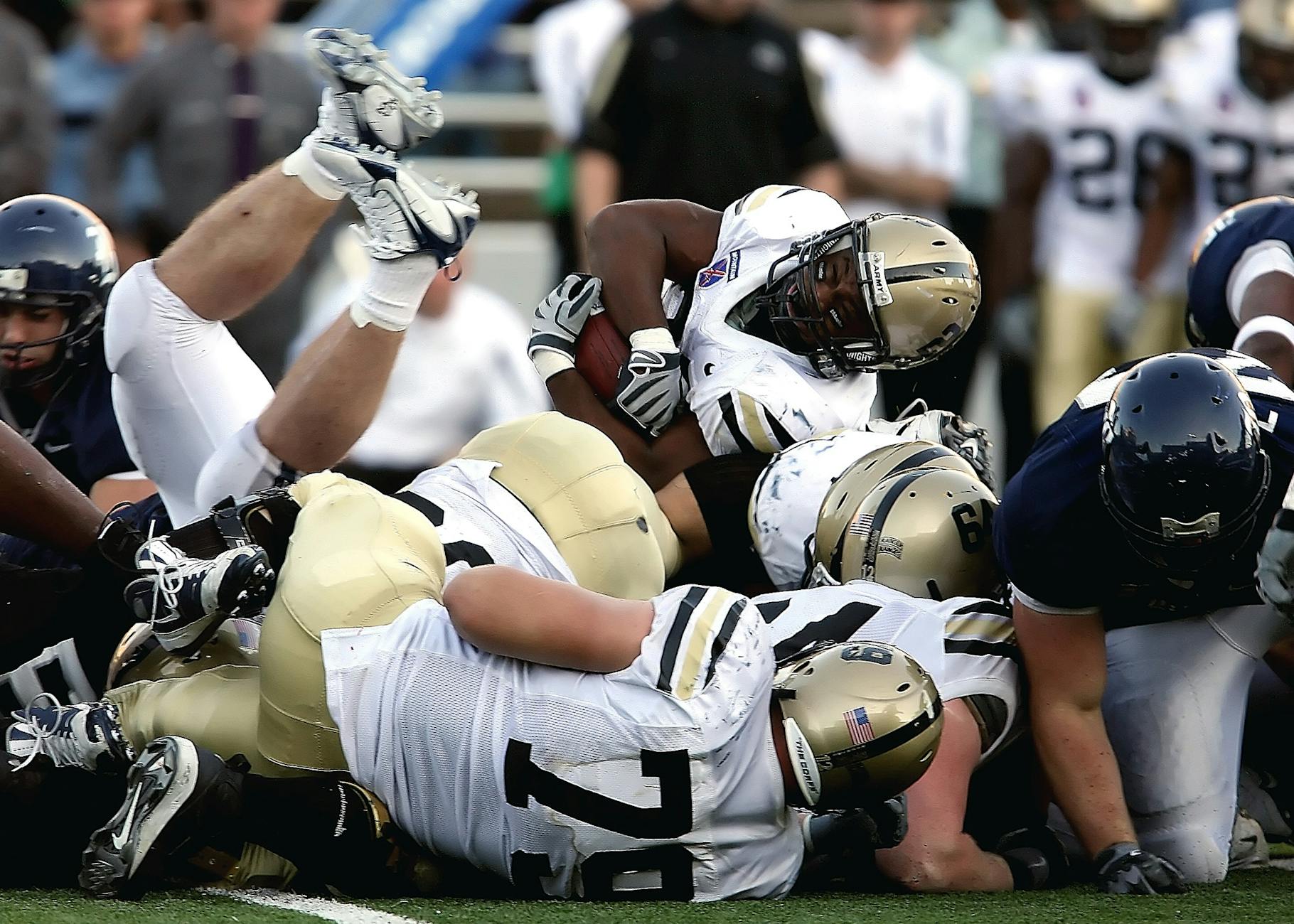
Photo by Pixabay on Pexels
See how schedule data, roster changes, and game context fit together before drawing a final opinion.
What Are Three Predictions for the Next Quarter?
The next quarter of the 2026 college football cycle should produce clearer evidence about quarterback stability, conference hierarchy, and whether transfer-heavy rosters can perform consistently against physical opponents. These are not guaranteed outcomes, because anyone selling certainty in college football is either inexperienced or charging too much for theater. They are evidence-based expectations derived from schedule structure, roster turnover, and playoff incentives.
1. Quarterback continuity will separate contenders
Teams with experienced quarterbacks and stable offensive coordinators should gain an early advantage, especially in road games and hostile environments. The benefit is not merely passing accuracy; it includes protection identification, tempo control, audibles, and the ability to prevent a bad drive from becoming a disastrous quarter. Programs such as Oregon, Notre Dame, USC, and established SEC contenders will attract attention, but their real test will be how efficiently they operate when opponents remove the first read.
2. Conference depth will matter more than one headline victory
The strongest CFP résumés will likely come from teams surviving demanding conference schedules rather than simply winning one nationally televised opener. The SEC and Big Ten remain central to that conversation, while the ACC and Big 12 can reshape perceptions through road wins and unexpected title races. A team that wins seven or eight games against meaningful competition may deserve more respect than a team collecting a glossy record against weak opposition.
3. Late-season availability will decide the championship race
Injuries to offensive tackles, defensive backs, quarterbacks, and kickers can transform a contender in November. The national title schedule includes a long regular-season grind, conference championship pressure, bowl play, and CFP games, so depth is not a luxury. It is the entire vault. Programs with reliable second units should rise when fatigue, suspensions, and injuries expose teams built around eleven stars.
The practical forecast is therefore conservative: expect early volatility, stronger statistical signals by midseason, and a playoff race decided by depth and schedule quality. Watch how teams perform after halftime, against ranked opponents, and on third down. Those indicators are less glamorous than a viral touchdown, but they are where serious analysis begins.

Photo by ViAn Photography on Pexels
For continuing tournament context and daily sports coverage, review Stadium View’s match predictions and tactical analysis.
Frequently Asked Questions
Q: What is college football?
A: College football is American gridiron football played by university teams under NCAA and conference rules. The FBS is the highest-profile level and includes conferences such as the SEC, Big Ten, ACC, Big 12, and American Athletic Conference. The FCS, Division II, and Division III operate with different structures and postseason systems. Unlike the NFL, college football is closely tied to university identity, campus traditions, student-athlete eligibility, recruitment, and conference membership.
Q: When does the 2026 college football season start?
A: The 2026 college football schedule begins with Week 1 games listed from August 22 through September 7. Specific kickoff times vary by matchup, broadcaster, venue, and local time zone. Early games include international and cross-conference fixtures, including North Carolina versus TCU at Aviva Stadium in Dublin, Ireland. Check ESPN, NCAA.com, or the relevant school’s official athletics website because schedules and television assignments can change.
Q: How can I analyze a college football matchup?
A: Analyze a matchup by comparing schedule strength, quarterback play, offensive and defensive efficiency, injuries, venue, weather, and rest. Start with the depth chart, then examine third-down conversion, red-zone scoring, explosive plays, pressure rate, and turnover margin. Do not rely on rankings alone, particularly during the first month of the season. A team’s performance against quality opponents is generally more informative than an undefeated record against weak opposition.
Q: What is the difference between FBS and FCS college football?
A: FBS and FCS are different NCAA football subdivisions with distinct roster, scholarship, scheduling, and postseason structures. FBS programs compete for selection into the College Football Playoff and bowl games, while FCS teams compete in an NCAA championship tournament. FBS games often receive greater national television exposure and larger athletic budgets, although FCS programs can defeat FBS opponents in nonconference games. Comparing records across the two subdivisions without context is a rookie error.
Q: Is college football betting worth it?
A: College football betting is only potentially worthwhile when it is treated as entertainment with strict financial limits, not as guaranteed income. Odds such as TCU -6.5 or USC -35.5 represent market expectations and bookmaker pricing rather than certain outcomes. Compare multiple sources, verify injuries, understand line movement, and use a predetermined budget. Never chase losses, borrow money, or increase stakes simply because a favorite appears emotionally irresistible.
Q: What should I do if a college football schedule changes?
A: If a college football schedule changes, verify the update through the school, conference, NCAA.com, ESPN, or the official broadcaster before relying on the original kickoff time. Weather, television decisions, venue issues, and health or safety concerns can alter dates and locations. Recheck local time, stadium information, ticket policies, and betting markets because a change in venue may also change the expected home-field advantage.
Q: How does the College Football Playoff affect the regular season?
A: The College Football Playoff makes regular-season strength, conference performance, and high-quality wins central to national championship qualification. A team’s record is evaluated alongside opponent quality, road results, losses, conference title performance, and player availability. Consequently, late-season games can matter even when a team has already secured bowl eligibility. The correct approach is to follow the full résumé, not merely the latest ranking graphic.
College football rewards attention to detail, and 2026 will punish anyone who mistakes noise for knowledge. Follow the schedule, evaluate the entities that shape each matchup, and keep reputation in its proper place: useful evidence, never divine revelation.
Ready to follow the season with a more disciplined analytical lens?