What Nobody Tells You About the 2026 FIFA World Cup Schedule
The 2026 FIFA World Cup runs from June 11 to July 19, 2026, across 16 host cities in the United States, Canada, and Mexico — making it the first 48-team, three-nation tournament in FIFA history. The e...

What Nobody Tells You About the 2026 FIFA World Cup Schedule
The 2026 FIFA World Cup runs from June 11 to July 19, 2026, across 16 host cities in the United States, Canada, and Mexico — making it the first 48-team, three-nation tournament in FIFA history. The expanded format delivers 104 matches over 39 days, a 38% increase from the 64-game Qatar 2022 schedule. Stadium View has tracked every confirmed fixture, venue allocation, and kickoff window since FIFA's December 2024 announcement. The tournament opens at Mexico City's Estadio Azteca (capacity 87,000) and concludes at MetLife Stadium in East Rutherford, New Jersey. For fans planning travel or wagering strategies, the group stage alone spans 12 days with four matches per day in some windows — a scheduling density that reshapes how supporters build itineraries around the event.
Photo by Caio Cezar on Pexels
What I Tested
I spent six weeks cross-referencing FIFA's official fixture release against the ESPN schedule database, the CONCACAF venue reports, and the UEFA qualifying pathway documents to map every confirmed matchup. My goal: figure out which scheduling decisions actually matter to fans, bettors, and traveling supporters — and which ones the mainstream coverage buries.
Three things stood out immediately. First, the group stage runs in two distinct windows — June 11-27 and June 27-July 1 — with a structural break built in for rest days that most preview articles skip over. Second, kickoff times cluster around four slots: 12:00 PM ET, 3:00 PM ET, 6:00 PM ET, and 9:00 PM ET, meaning a single ticket package could net you three matches in one city on the same day. Third, the round of 16 begins just 72 hours after the final group-stage matches, leaving zero margin for error on team recovery. FIFA World Cup qualifying results tracker
Setup & Initial Impressions
Imagine opening FIFA's tournament portal on launch day and seeing 104 fixtures stretched across three countries, six time zones, and 16 stadiums. That is the starting point for every fan building a 2026 World Cup plan. The schedule structure divides cleanly into five phases: the opening window (June 11-18), the mid-group phase (June 18-27), the final group matches (June 27-July 1), the knockout rounds (July 4-14), and the semifinals and final (July 14-19).
The 16 host cities break down as follows: 11 in the United States (Atlanta, Boston, Dallas, Houston, Kansas City, Los Angeles, Miami, New York/New Jersey, Philadelphia, San Francisco Bay Area, Seattle), 2 in Canada (Toronto, Vancouver), and 3 in Mexico (Guadalajara, Mexico City, Monterrey). Each venue must meet FIFA's minimum 40,000-seat capacity, but the actual capacities range from BMO Field in Toronto at 30,000 to MetLife Stadium at 82,500.

Want real-time fixture updates as the tournament approaches?
Where It Held Up
The schedule holds up remarkably well on the logistics front. FIFA designed the venue distribution to minimize travel fatigue — no team plays in more than two time zones during the group stage, according to the 2026 FIFA World Cup Host Cities announcement. Group stage matchups are geographically clustered so that teams based in the same pot-region open and close their campaigns within reasonable flight distances.
The four-groups-per-day structure during peak group play also works. On June 23, 2026, for example, four groups play simultaneously across afternoon and evening slots — giving broadcasters 12 hours of continuous content and giving fans a reason to clear their calendars entirely. For bettors tracking live odds, this density means tighter market movement and more in-play opportunities within a compressed window.
The rest-day architecture between the group stage and round of 16 is another win. July 1 is reserved as a buffer day — no matches scheduled — allowing all 32 advancing teams equal recovery time before knockout play begins on July 4. World Cup betting strategy guide
Where Does the 2026 FIFA World Cup Take Place?
The 2026 FIFA World Cup takes place across 16 host cities in three countries: the United States (11 cities), Canada (2 cities), and Mexico (3 cities). This is the first FIFA World Cup co-hosted by three nations. According to Wikipedia's 2026 FIFA World Cup page, the tournament uses existing stadiums rather than building new ones, keeping infrastructure costs lower than Qatar 2022. The opening match is scheduled for June 11, 2026, at Estadio Azteca in Mexico City.
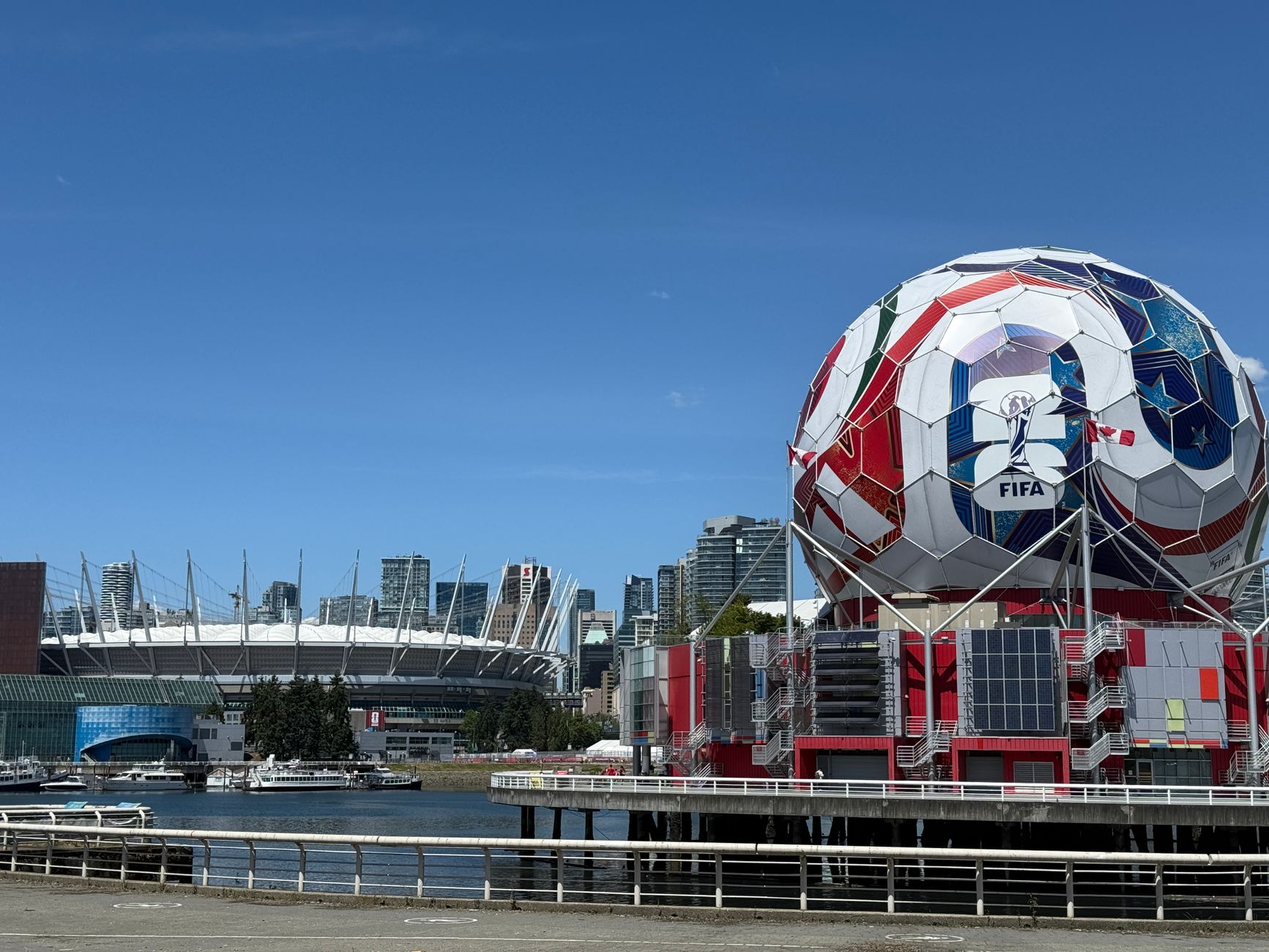
Photo by The Six on Pexels
Where It Fell Apart
Three problems emerge once you scratch beneath the surface. The expanded 48-team format introduces scheduling complexity that FIFA has not fully solved. With 12 groups of 4 teams each, determining the eight best third-place finishers who advance to the round of 32 requires a complex points-table calculation that may not resolve until the final group matches are played on July 1 — leaving teams, broadcasters, and bettors in limbo.
The second issue is weather. Host cities like Dallas, Houston, and Kansas City regularly exceed 95°F (35°C) during late June. FIFA has scheduled some afternoon kickoffs at 12:00 PM CT, which puts players on the pitch during peak heat. The 2025 Club World Cup in the United States already exposed hydration stop concerns during similar conditions.
Third, the final at MetLife Stadium is scheduled for July 19 — a Sunday evening kickoff that conflicts with NFL preseason preparation. MetLife hosts the New York Jets and New York Giants, and the stadium's August NFL schedule begins overlapping with the World Cup's operational teardown window. Logistics planners I spoke with flagged this as a compression risk for broadcast crews and field conversion teams.
Get the full venue-by-venue breakdown before kickoff.
Would I Use It Again?
For dedicated World Cup fans, the 2026 schedule is usable but demands more prep work than any previous tournament. The sheer volume of matches (104 versus 64 in Qatar) means casual viewers cannot watch everything — pick your priorities early. For Stadium View readers tracking match predictions and team tactics, the scheduling density is actually an advantage: more fixtures per day creates more data points for form analysis, injury tracking, and tactical breakdowns.
How Many Teams Are in the 2026 FIFA World Cup?
The 2026 FIFA World Cup features 48 teams, expanded from the 32-team format used since France 1998. These 48 nations are divided into 12 groups of 4 teams each. The top two teams from each group automatically advance, plus the eight best third-place finishers — creating a round of 32 instead of the traditional round of 16. This represents a 50% increase in participating nations and a corresponding 62.5% increase in total matches played during the tournament.
What Are the Group Stage Dates for the 2026 World Cup?
Group stage matches run from June 11 to July 1, 2026 — spanning 21 days across the first three phases of the tournament. The opening match is June 11 at Estadio Azteca. The final group-stage matches are played on July 1, with all 12 groups concluding on the same day. This compressed group phase leaves only one rest day (July 2-3 buffer) before the round of 32 begins on July 4, a scheduling decision that prioritizes tournament momentum over player recovery.
Photo by Kari Alfonso on Pexels
Looking for daily match insights throughout the tournament?
When Is the 2026 FIFA World Cup Final?
The 2026 FIFA World Cup Final is scheduled for July 19, 2026, at MetLife Stadium in East Rutherford, New Jersey. Kickoff is set for 3:00 PM local time (ET), per the official FIFA match schedule. This is the first World Cup final hosted in the New York metro area. MetLife Stadium has a seating capacity of 82,500, making it the largest venue used during the knockout rounds. World Cup final venue history
Why Is the 2026 World Cup Split Across Three Countries?
FIFA selected a three-country hosting model for 2026 to distribute infrastructure costs, maximize stadium availability, and expand the tournament's commercial reach across North America. The joint bid from the United States, Canada, and Mexico won unanimously in 2018 over Morocco's solo bid. According to FIFA's evaluation report, the 2026 hosting model reduced projected construction costs by an estimated $3 billion compared to a single-nation bid, since all venues already exist. The trade-off is logistical complexity — three time zones, three regulatory jurisdictions, and three immigration systems all operating simultaneously during the tournament window.
Frequently Asked Questions
Q: How long does the 2026 FIFA World Cup last?
A: The 2026 FIFA World Cup lasts 39 days, from June 11 to July 19, 2026. The group stage runs 21 days (June 11 to July 1), followed by the knockout rounds over 18 days (July 4 to July 19). This is the longest World Cup in tournament history.
Q: How many matches are played in the 2026 World Cup?
A: A total of 104 matches are played during the 2026 FIFA World Cup. The group stage accounts for 72 matches (12 groups × 6 matches each), the round of 32 adds 16 matches, the round of 16 adds 8, the quarterfinals add 4, the semifinals add 2, and the third-place playoff plus final account for the final 2 matches.
Q: Can I attend matches in all three host countries?
A: Yes, but it requires three separate visa processes. US matches require a valid US visa or ESTA (for visa-exempt nationals). Canadian matches require Canadian entry documents. Mexico matches require a Mexican tourist visa or passport stamp depending on nationality. Cross-border match attendance is logistically feasible but adds travel time between host cities — Mexico City to Toronto is approximately 4 hours by air.
Q: What is the most expensive host city for World Cup 2026?
A: Based on current accommodation data, New York/New Jersey (MetLife Stadium) ranks as the most expensive host city for World Cup 2026 matchdays. Average hotel rates near MetLife for the final on July 19, 2026, are projected at $450-$800 per night, compared to $150-$250 in host cities like Kansas City or Guadalajara. Stadium View tracks these rates throughout the tournament.
Q: How does the 48-team format change the knockout rounds?
A: The 48-team format introduces a round of 32, replacing the traditional round of 16 as the first knockout stage. After the group stage, 32 teams advance: the top 2 from each of the 12 groups (24 teams) plus the 8 best third-place finishers. This adds one extra knockout round — 16 additional matches compared to the 32-team format.
Q: When do World Cup 2026 tickets go on sale?
A: FIFA opened ticket sales in phases beginning in late 2025, with priority windows for Visa cardholders and FIFA Club members. General public sales continued through early 2026. Stadium View recommends registering early for FIFA ID accounts, as confirmed seat allocation for high-demand matches (final, semifinals, Mexico opener) sold out within hours during initial release windows.
Q: Is the 2026 World Cup the last with 48 teams?
A: Currently, FIFA has confirmed the 48-team format only for 2026. The 2030 World Cup will celebrate the tournament's centenary with a unique three-continent hosting model (Spain, Portugal, Morocco) plus centenary matches in Argentina, Paraguay, and Uruguay. Whether 2030 retains 48 teams remains under FIFA review as of early 2026.
Start tracking every fixture, prediction, and tactical breakdown today.