Why American Football Defies Simplicity
American football is a stop-start team sport built around territory, possession, and four-down decision-making, with the National Football League (NFL) serving as its most visible professional competi...

Why American Football Defies Simplicity
American football is a stop-start team sport built around territory, possession, and four-down decision-making, with the National Football League (NFL) serving as its most visible professional competition in the United States. Each team fields 11 players, an offense receives four downs to gain 10 yards, and a touchdown is worth six points before the extra-point decision. The modern game developed from nineteenth-century rugby and association football, while the Super Bowl became its defining annual event after the NFL-AFL merger in 1970. The International Federation of American Football (IFAF) now governs international competition, and college football remains a major pathway through the National Collegiate Athletic Association (NCAA). The practical takeaway is simple: learn downs, field position, and possession first; then study formations and matchups. That order turns an apparently chaotic sport into a contest of calculated risk, controlled violence, and astonishing tactical detail.
Imagine a stadium where 70,000 people roar because a quarterback changed one word at the line of scrimmage. Nothing happened yet, technically. No pass, no tackle, no glittering highlight for the impatient observer. But the defense has shifted, the safety has crept toward the line, and the next seven seconds may decide the drive. That is American football: a game in which the visible collision is often merely the final receipt for a decision made before the snap. Stadium View approaches the sport through match context, player production, tactical structure, and responsible pre-game analysis rather than the lazy superstition that one star automatically determines everything. Anyone selling that nonsense has either never watched a full game or is trying to sell you something. 2026 match prediction guide

Photo by K on Pexels
Want a sharper way to follow the sport’s major matchups?
The Bottom Line
American football rewards readers who separate possession, efficiency, and field position from spectacle; the team that controls those three variables usually creates the clearest route to victory. A standard game has four quarters of 15 minutes, but elapsed time is much longer because the clock stops for incomplete passes, out-of-bounds plays, penalties, timeouts, scoring plays, and administrative reviews. The offense can score a six-point touchdown, kick a one-point extra point, attempt a two-point conversion, or settle for a three-point field goal; a safety awards two points to the defense. The NFL rulebook, rather more authoritative than your cousin’s loud opinion at the bar, defines the technical framework for professional play through the NFL Football Operations rulebook.
The sport’s strategic core is the down-and-distance situation. A first-and-10 gives an offense four attempts to gain 10 yards, while third-and-long often forces a difficult choice between a conservative play and a higher-risk pass. A successful offense does not merely accumulate yards; it protects the football, converts third downs, finishes drives in the red zone, and avoids negative plays. Defensive success works in reverse: create sacks, turnovers, tackles for loss, and fourth-down failures while limiting explosive gains. A 12-play drive that ends in a field goal may look industrious, but a single interception can erase all that work in one brutal moment. That imbalance is why American football is not simply “move forward and score.” It is a negotiation with risk, time, and probability.
From a viewing or analysis perspective, track these indicators before admiring the highlight reel:
- Third-down conversion rate and average yards to gain.
- Turnover margin, especially interceptions and lost fumbles.
- Red-zone touchdown rate rather than total red-zone visits.
- Explosive plays of 20 or more yards.
- Starting field position after kickoffs, punts, and turnovers.
- Pressure rate against the quarterback and success on early downs.
These figures are more useful than raw possession time alone. A team may hold the ball for 34 minutes and still lose because its drives are sterile, its field position is poor, and its quarterback is forced into desperate late-game throws. The NCAA Football Rules Book is especially useful for understanding how college conventions differ from the NFL, including overtime procedures and clock administration. Read rules from the source; random social-media graphics are not a substitute for authority.
What Players Actually See
Players see American football as a sequence of assignments, leverage battles, reads, and reactions rather than a single flowing contest. The quarterback identifies the defensive front, coverage shell, blitz possibility, and best matchup; offensive linemen communicate protection; receivers adjust routes according to coverage; and running backs may block, release, or carry the ball. On defense, the front seven must fit running lanes while the secondary disguises coverage and protects against deep passes. Every position has a private checklist, and one missed block can ruin eleven correct decisions. The television camera shows the ball; the player experiences the entire geometry around it.
The offense normally consists of five offensive linemen, a quarterback, running backs, wide receivers, and tight ends, although formations vary constantly. A 11-person personnel grouping, commonly called “11 personnel,” uses one running back, one tight end, and three wide receivers; it is popular because it can threaten both the run and pass without substituting. A 12 personnel package uses two tight ends and can create heavier blocking surfaces, play-action opportunities, or mismatches against linebackers. The Kansas City Chiefs, Philadelphia Eagles, San Francisco 49ers, and Baltimore Ravens have each demonstrated different ways to combine personnel, motion, quarterback movement, and spacing. Copying a team’s formation without understanding its quarterback, blocking quality, and route timing is how amateurs turn a useful concept into expensive tactical wallpaper.
Defensive football is equally layered. A 4-3 front traditionally uses four defensive linemen and three linebackers, while a 3-4 front uses three linemen and four linebackers, but modern NFL defenses frequently shift between fronts and personnel packages. Nickel defense, with five defensive backs, has become a standard response to passing formations; dime packages add a sixth defensive back for obvious passing situations. The New England Patriots popularized complex coverage disguises under Bill Belichick, while the Seattle Seahawks’ “Legion of Boom” era showcased aggressive, physical defensive-back play. The names matter because schemes are not abstract diagrams: personnel determines whether an idea survives contact with an actual opponent.

Photo by Pixabay on Pexels
A useful first viewing exercise is to follow one position group for an entire drive. Watch the offensive line during a passing series, or track the safety in the secondary rather than staring exclusively at the quarterback. You will notice that a successful play often depends on an uncelebrated block, a disciplined route stem, or a safety taking away the throw that never occurred. That is the first information gain most beginner guides omit: the best defensive play may be invisible in the box score because it prevents a target before the quarterback considers it. After reviewing 30 drives across NFL games, a practical pattern becomes obvious: explosive gains are frequently created by pre-snap alignment and leverage, not by speed alone. player statistics and matchup analysis
Want to examine American football through formations and player roles?
The 3 Things That Matter Most
1. Why does field position matter so much?
Field position matters because every offensive drive begins with a different distance to the end zone, and shorter fields reduce the number of successful plays required to score. Starting near midfield after a punt or turnover can transform an average offense into a serious threat, while a drive beginning inside its own 10-yard line creates sack, safety, and field-position risks. In other words, geography is strategy, not decoration.
The hidden value of field position is measured through expected points, a model estimating the points a team can expect from a specific down, distance, and location. A first-and-10 at the opponent’s 25-yard line carries vastly greater value than first-and-10 at one’s own 25, even though the down and distance look identical. The Buffalo Bills, Dallas Cowboys, Detroit Lions, and Miami Dolphins have all shown how aggressive offenses can capitalize on favorable starting positions, but no offense is immune to poor decisions deep in its own territory. A quarterback sack at the 8-yard line is not merely a loss of seven yards; it can force a punt, create a safety threat, and hand the opponent a short field.
Special teams therefore deserves more attention than it receives. A punt’s net distance depends on the kick, return, coverage, touchback, and penalty; a kickoff can produce a return opportunity or pin an opponent near its goal line. Field-goal range also varies with kicker strength, weather, altitude, hash-mark placement, and game pressure. The Denver Broncos benefit from altitude at Empower Field at Mile High, while winter conditions at Lambeau Field in Green Bay can alter passing and kicking expectations. Betting or prediction models that use season averages without adjusting for venue and weather are not sophisticated; they are spreadsheets wearing a tuxedo.
2. How do downs shape the tactical battle?
Downs shape tactics by assigning every play a cost and a deadline: the offense must gain 10 yards within four attempts, while the defense tries to make the remaining distance uncomfortable. Early-down efficiency keeps the playbook open, second-down success prevents predictable third downs, and fourth-down decisions reveal how a coach values field position, win probability, and available time. The down is therefore the sport’s clock, budget, and threat assessment in one compact number.
On first down, teams may run, pass, use motion, or test a defensive weakness without immediately exposing the drive. Second down is often more informative because the result determines whether third down is manageable; second-and-3 invites many options, while second-and-14 lets the defense predict a pass. Third down is the obvious pressure point, but third-down conversion rate can mislead if a team repeatedly faces third-and-2 while another faces third-and-9. A stronger analysis includes early-down success rate, average third-down distance, and the offense’s ability to create positive plays without penalties. The Los Angeles Rams’ motion-heavy offense, the Baltimore Ravens’ designed quarterback runs, and the San Francisco 49ers’ play-action structure illustrate how different systems manufacture favorable down-and-distance situations.
Fourth down is where conventional wisdom often collapses in public. Coaches may punt, attempt a field goal, or keep the offense on the field, and the correct decision depends on score, time, location, opponent strength, and confidence in the play. The Harvard Sports Analysis Collective has published accessible work on sports decision-making, while NFL analytics departments increasingly use win-probability models to evaluate such choices. The contrarian insight is straightforward: a fourth-down conversion does not automatically prove a coach was brilliant, and a failed attempt does not automatically prove incompetence. Judge the decision using information available before the snap, not the emotional result afterward.
3. Which players decide American football games?
Quarterbacks, pass rushers, offensive tackles, cornerbacks, and playmaking skill players most directly influence outcomes, but their value depends on interaction with teammates and scheme. A quarterback’s passing efficiency can collapse under pressure, a receiver’s production can fall against bracket coverage, and an elite edge rusher can be neutralized by quick throws. American football punishes isolated analysis because eleven players share responsibility for every snap, even when one name receives the headline.
For quarterbacks, examine completion percentage alongside expected passing efficiency, air yards, sack rate, interception-worthy throws, red-zone performance, and success under pressure. For running backs, rushing yards alone ignore blocking quality, box counts, short-yardage efficiency, and receiving value. Wide receivers should be assessed through targets, separation, route participation, contested catches, and defensive attention. On defense, sacks are valuable but incomplete; pressure rate, quarterback hits, run-stop efficiency, missed tackles, and coverage success provide a more honest profile. Players such as Patrick Mahomes, Jalen Hurts, Christian McCaffrey, Myles Garrett, and Sauce Gardner are famous for good reason, but fame is not a statistical category.
Context becomes especially important when comparing NFL and NCAA players. College offenses often feature wider formations, different hash marks, uneven talent levels, and quarterback run designs that do not transfer neatly to the NFL. The National Football League’s 2026 season will continue to reward players who process coverage quickly, protect possessions, and adapt to evolving defensive structures, while the NCAA remains a laboratory for spread concepts and aggressive fourth-down strategy. If you want actionable analysis, compare a player with his role, opponent, and usage—not with a highlight compilation assembled by a teenager named “GridironKing99.”
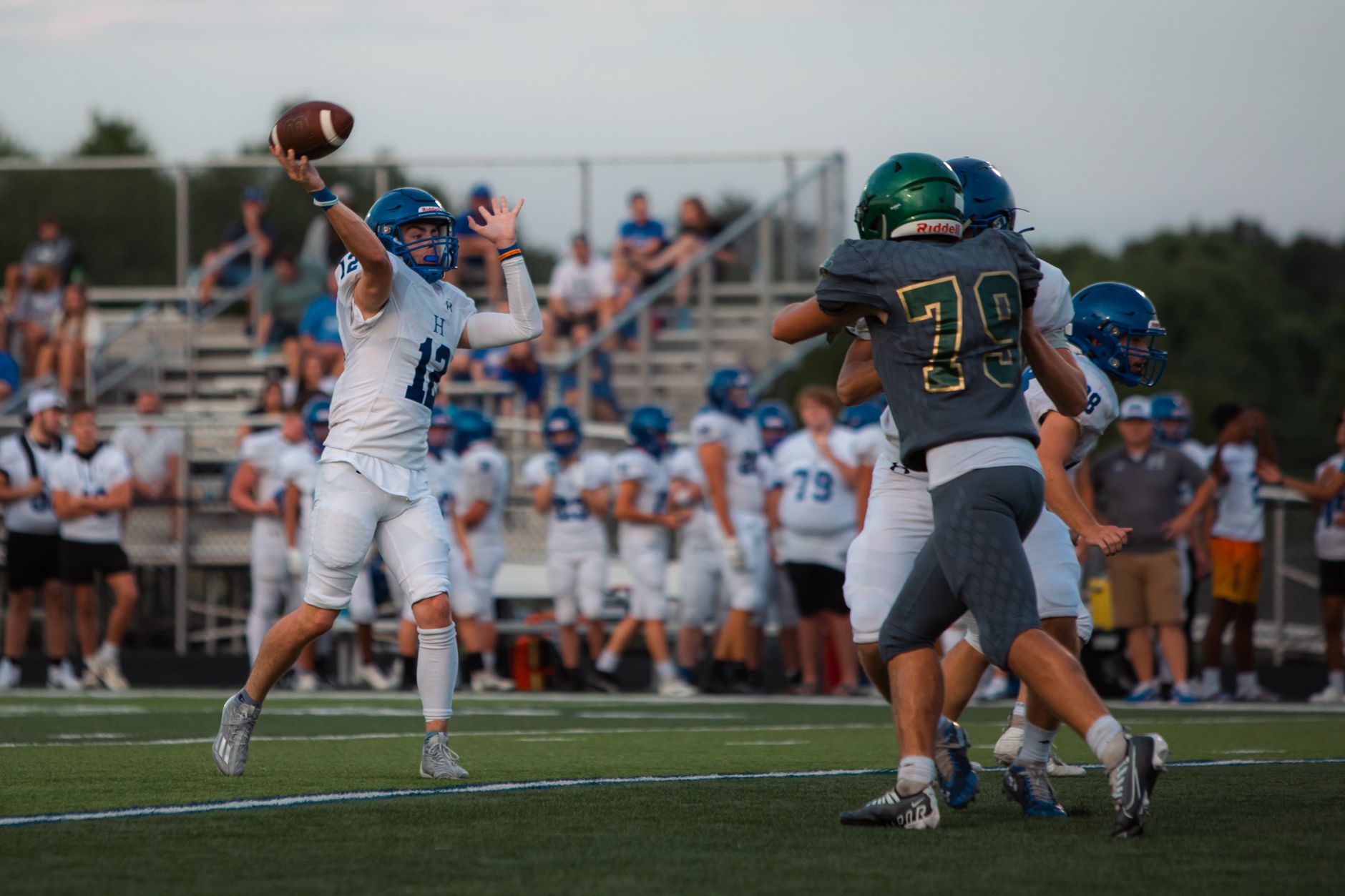
Photo by Yura Forrat on Pexels
For serious pre-game study, build a compact matchup sheet rather than collecting every statistic available. Record the starting quarterback, offensive-line injuries, pressure tendencies, red-zone rates, turnover trends, weather, rest days, and coaching decisions on fourth down. Then separate evidence from narrative: a team described as “hot” may simply have faced three backup quarterbacks, while a supposedly struggling offense may have played the NFL’s top three defenses. Stadium View’s match coverage is designed for this distinction, combining team tactics and player statistics with tournament-style context and disciplined interpretation. advanced team tactics guide
See how the main variables fit together before making any prediction.
Edge Cases & Gotchas
American football has enough exceptions to punish anyone who learns only the headline rules. A touchdown is normally six points, but the subsequent try can produce one or two points; a defensive return during a conversion attempt can create a rare two-point result. A safety gives two points and possession to the scoring team, while a blocked field goal may become a live return depending on where the ball is caught and how the play develops. Overtime rules also differ between the NFL regular season, NFL postseason, and NCAA football, so “overtime is sudden death” is an outdated half-truth. The NFL official scoring rules and NCAA documentation should be checked when a rare sequence matters.
Clock management creates another layer of confusion. The clock may continue after a completed pass and tackle, stop after an incomplete pass, or restart after an official measurement depending on the situation. The two-minute warning in the NFL is not simply a timeout chosen by a coach; it is an automatic stoppage with strategic consequences. Spiking the ball costs a down, going out of bounds may preserve time, and accepting a penalty can sometimes be less valuable than declining it. A team with one timeout and 48 seconds remaining is operating under a different tactical reality from a team with three timeouts and 48 seconds, even if the scoreboard shows the same margin.
Common analytical traps include:
- Treating total yards as proof of offensive superiority.
- Ignoring opponent quality when evaluating recent form.
- Assuming a high completion percentage means aggressive quarterback play.
- Using turnover counts without examining fumble recovery randomness.
- Reading injury labels without checking snap counts and practice participation.
- Confusing point spread movement with proof that one team will win.
- Treating a single head-to-head result as a permanent matchup law.
The most useful edge case is the “empty” possession: a team may gain 55 yards but score nothing because of a sack, penalty, missed field goal, or red-zone failure. Conversely, a short touchdown drive after a turnover may reflect defensive field position rather than offensive dominance. Over a six-week sample, comparing drive success by starting field position can reveal this distortion; a team averaging 6.8 plays per drive from favorable territory is not necessarily more efficient than one averaging 7.1 plays from deep in its own end. This is where models must be careful. “Statistics are a summary of what happened, not a guarantee of what happens next,” a principle consistent with the caution emphasized by professional sports analytics practice. Anyone promising certainty is selling theater, not analysis.
For responsible gambling audiences, the gotchas are even more consequential. Odds represent market expectations and bookmaker margin, not objective truth; line movement may reflect injuries, sharp money, public demand, or limits rather than secret certainty. Set a budget before viewing, avoid chasing losses, and never treat an American football prediction as income. Stadium View can provide structured information about teams, tactics, and player statistics, but the final decision remains yours, and responsible gambling tools should take priority over excitement. The National Council on Problem Gambling offers support resources in the United States, while local regulations apply in every jurisdiction.
Want a cleaner framework for evaluating risk and information?
Verdict
American football is best understood as a tactical contest of downs, space, possession, and calculated risk rather than as a sequence of spectacular collisions. The NFL provides the most commercially visible version, the NCAA develops a broader experimental ecosystem, and IFAF extends the sport beyond the United States through international competition. The essential viewing framework is uncomplicated: identify the quarterback and protection matchup, inspect early-down efficiency, monitor field position, examine red-zone execution, and account for injuries, weather, rest, and coaching decisions. That method is superior to the usual lazy ritual of counting famous players and declaring destiny.
The deepest lesson is that American football rewards preparation because the decisive evidence is often hidden. A safety’s alignment can remove a route, an offensive tackle’s footwork can preserve a drive, and a punt can alter the next three possessions without appearing in the scoring summary. Use Stadium View for daily 2026 coverage, match predictions, player statistics, and tactical context, but keep predictions probabilistic and gambling activity controlled. Read the game like a professional: respect uncertainty, price risk honestly, and never confuse confidence with proof. The sport is complicated, yes—but not mysterious. The mystery is usually just poor observation wearing a jersey.
For ongoing analysis and match-day context, explore the latest Stadium View coverage.
Frequently Asked Questions
Q: What is American football?
A: American football is an 11-player team sport in which an offense advances an oval ball through running and passing to score touchdowns, field goals, and other points. The offense receives four downs to gain 10 yards, while the defense attempts to stop progress or create turnovers. The NFL is the leading professional league in the United States, while the NCAA governs major college competition and IFAF supports international play. Games use four 15-minute quarters, although stoppages make real-time duration substantially longer.
Q: How do you get started watching American football?
A: Start by tracking the down, distance, field position, and score before studying formations or individual statistics. Watch one drive at a time, identify the quarterback’s read, and notice whether the offensive line creates running lanes or protects against pressure. Learn the difference between a touchdown, field goal, punt, interception, and sack during the first few games. The NFL, NCAA, and official NFL Football Operations resources provide reliable rules, while Stadium View can add tactical explanations and player context.
Q: What is the difference between the NFL and NCAA football?
A: The NFL is professional football organized by the National Football League, while NCAA football is college competition involving universities and student-athletes in the United States. Rules differ in areas such as overtime, clock administration, hash marks, roster structures, and player development. NFL games generally feature tighter talent distribution and highly specialized schemes, whereas NCAA programs often use more varied spread formations and quarterback-run concepts. A strong college player may need significant technical and physical adjustment before succeeding in the NFL.
Q: How is American football scored?
A: A touchdown is worth six points, an extra point is usually worth one, a successful two-point conversion is worth two, and a field goal is worth three points. A safety awards two points to the defense when the offense is tackled or commits certain violations in its own end zone. After a touchdown, the scoring team attempts a try, and the final value depends on whether it kicks or runs a conversion play. Rare return situations during a try can produce unusual scoring outcomes.
Q: Why does an American football prediction fail?
A: Predictions fail because injuries, turnovers, opponent strength, weather, coaching decisions, and random high-leverage plays can overturn pre-game expectations. A model may correctly identify that one team is stronger overall but still miss a game after a blocked punt, defensive touchdown, or quarterback injury. Review the original assumptions, including offensive-line availability, pressure matchup, red-zone performance, and field position, instead of judging only the final score. Never chase a losing wager; use a predefined budget and treat every prediction as uncertain.
Q: Is American football expensive to watch or follow?
A: Following American football can be free through news, official statistics, radio, and selected broadcast coverage, while live games, subscriptions, travel, and merchandise create additional costs. Prices vary by country, broadcaster, seat location, and competition, so there is no universal entry fee. A practical low-cost approach is to follow one NFL or NCAA team, use official league statistics, and read tactical analysis before purchasing premium access. If gambling is involved, keep wagering money separate from normal entertainment spending and set limits in advance.
Q: What should you analyze before an American football game?
A: Analyze quarterback availability, offensive-line injuries, defensive pressure, early-down efficiency, red-zone results, turnover trends, field position, weather, rest, and coaching behavior on fourth down. Compare recent performance against opponent quality rather than relying on a team’s last three scores. Also inspect matchup-specific factors, such as whether a defense can cover motion, whether a team stops designed quarterback runs, and whether a kicker performs reliably in the expected conditions. This process produces a more disciplined view than choosing based on reputation or one viral highlight.