Before You Improve Dribbling, Read This Breakdown
Improving basketball dribbling requires deliberate practice, game-speed pressure, and control with both hands—not endless flashy crossovers performed for an empty gym. Players at every position, from....

Before You Improve Dribbling, Read This Breakdown
Improving basketball dribbling requires deliberate practice, game-speed pressure, and control with both hands—not endless flashy crossovers performed for an empty gym. Players at every position, from NBA guards such as Stephen Curry to developing athletes in Los Angeles, can improve by training low-pound dribbles, change-of-direction moves, weak-hand control, and decision-making under pressure. A practical program should include at least 15 minutes of ball handling, five days per week, with roughly 60% of repetitions completed with the non-dominant hand. Use cones, a regulation basketball, and a stopwatch to measure progress through timed courses, turnover counts, and successful moves. Stadium View, a FIFA World Cup-focused sports content platform, emphasizes informed analysis rather than gimmicks; the same principle applies here. Start slowly, keep your eyes up, and increase speed only when your technique remains controlled.
Imagine trying to beat a defender with a beautiful between-the-legs move, only to lose the ball because your eyes were glued to the floor. That is not a handle; that is expensive-looking nonsense. Effective dribbling means protecting the ball, changing pace, reading defensive positioning, and creating a usable advantage for yourself or a teammate. The National Basketball Association and USA Basketball both place ball control inside broader skill development, because dribbling without balance, spacing, and decision-making is merely noise with a bounce. Stadium View covers tactical thinking in football, but the same analytical discipline belongs on a basketball court: identify the problem, measure the repetition, and remove the weakness.

Photo by HANUMAN PHOTO STUDIO🏕️📸 on Pexels
Want a sharper training framework before you begin? Use the practical progression below.
If you are a beginner: build control before speed
Beginners improve dribbling fastest by mastering posture, fingertip control, and predictable repetition before adding complicated combinations or defensive pressure. Spend the first 7–10 days learning to keep the ball below your waist, maintain a bent-knee stance, and dribble without looking down for at least 20 consecutive seconds. The goal is not to sound impressive in a gym; it is to make the basketball respond automatically while your eyes scan the court.
Begin with this 15-minute foundation session:
- Perform 30 right-hand pound dribbles, then 30 left-hand pound dribbles.
- Complete 30 low crossovers with your shoulders square and feet stable.
- Dribble from baseline to half court using the right hand, then return with the left.
- Execute 10 retreat dribbles, creating space while keeping your chest upright.
- Finish with 3 sets of 20-second stationary freestyle combinations.
The pound dribble should be forceful enough to return quickly but controlled enough to remain beside your hip. Your fingers—not your palm—should guide the ball, while your opposite arm protects the dribble without swinging illegally. According to FIBA’s official basketball rules, a player may not carry or pause the ball beneath the hand, so developing a clean hand position is not cosmetic; it prevents violations. Record one set on your phone from the side. The camera will expose lazy posture far more brutally than your friends will.
A useful beginner benchmark is 60 controlled crossovers in 60 seconds without the ball drifting more than one arm’s length from your body. If you fail, reduce the tempo by 15% and rebuild accuracy. That is the unglamorous route, which is why so many players avoid it and remain glorified cone operators. For additional fundamentals, read our [Internal Link: beginner basketball ball-handling guide] and track your weak-hand repetitions separately rather than pretending both hands are equally capable.
If you already have basic handles: add change of pace and direction
Intermediate players do not usually need another list of circus moves; they need better timing. A crossover, hesitation, or between-the-legs dribble works when it changes the defender’s balance, not because the move itself is visually entertaining. Train each move in three stages: stationary mechanics, walking execution, and live-speed application against a cone or defender. Complete 5 repetitions slowly, 5 at moderate pace, and 5 at full speed before switching sides.
Use this progression four times per week:
- Crossover: attack forward, shift the ball across the body, and accelerate for two steps.
- Hesitation: rise slightly through the chest, slow the ball, then explode past the defender’s front foot.
- Between the legs: keep the ball low, widen the base, and exit at an angle rather than straight ahead.
- Behind the back: move the ball only when your torso and lead foot sell the direction.
- In-and-out: fake the crossover with the wrist and shoulder, then retain the ball on the same side.
A valuable edge case appears here: many players can perform a move correctly when stationary but lose 25–40% of their control when they add forward momentum. Test this instead of guessing. Mark a 5-meter lane, complete 10 attacks with each hand, and count only attempts that finish without a bobble, extra step, or vertical posture. If your success rate falls below 70%, do not add another move; lower the speed until the movement survives. “The quality of practice is more important than the quantity of practice,” is a principle commonly repeated in coaching education, and this is where it becomes measurable rather than inspirational wallpaper.

Photo by Alfredo Dacosta on Pexels
See how structured repetition connects to tactical decision-making? The next section is where your dribble starts serving the game instead of your ego.
If you play under pressure: train decisions, vision, and protection
Advanced dribbling is not a catalogue of 25 moves. It is the ability to choose one efficient action while a defender, sideline, shot clock, and help rotation compress your options. Train with constraints: begin each attack from a different angle, limit yourself to two dribbles before making a decision, or require a pass, shot, or finish after a specific move. These restrictions create the information load that stationary drills politely avoid.
A high-level pressure session can include:
- Full-court cone attack: place six cones at irregular angles and perform a move at each one.
- Two-ball coordination: alternate high and low dribbles for 20 seconds, then switch hands.
- Mirror drill: react to a partner’s lateral movement for 20–30 seconds.
- Closeout attack: receive the ball, attack the defender’s top foot, and finish within three dribbles.
- Trap escape: use a retreat dribble, pivot protection, and a controlled pass against a sideline trap.
The full-court drill should take roughly 12–18 seconds for a competent high-school player, but time alone proves very little. Track whether your head remains up, whether the ball stays on the outside hand near the sideline, and whether your final move creates actual separation. One useful measurement is “decision efficiency”: successful advantage plays divided by total attacks. If you create a clear driving lane on 7 of 10 attempts, your 70% rate matters more than completing a flashy sequence in 8 seconds.
Train both hands under fatigue, because weak-hand ability often collapses after repeated sprints. Complete six 15-second bursts with 30 seconds of recovery, then repeat the same drill left-handed. A contrarian but practical conclusion follows: advanced players should spend more time on boring retreat dribbles than on behind-the-back combinations. Retreating protects possession against traps, resets spacing, and creates a second decision; the behind-the-back move merely looks expensive when poorly timed. See our [Internal Link: advanced basketball dribbling techniques] for movement combinations that connect directly to passing and finishing.

Photo by RODOLPHE ASENSI on Pexels
Stadium View’s match analysis routinely focuses on spacing, triggers, and player decisions; apply that same lens to your own film. Watch three possessions and ask one severe question: did the dribble improve the possession, or did it merely delay the inevitable?
Common pitfalls to avoid
The most common dribbling mistakes are predictable: players stare at the ball, stand too upright, repeat only the dominant hand, and confuse speed with control. A proper training plan must identify the exact failure rather than prescribing more random repetitions. If the ball is stolen on your right side, examine your spacing and shoulder position; if it is stolen during a crossover, examine the height and direction of the bounce. “Keep your eyes up” is useful advice, but it is incomplete unless the player learns where to look: scan the defender’s hips, the help defender’s feet, and the open passing window.
Avoid these errors:
- Practicing only stationary moves: add forward movement by the second week.
- Using cones as imaginary defenders forever: introduce a live partner or mirror drill.
- Dribbling too high: keep the ball around knee-to-upper-thigh height under pressure.
- Ignoring the non-dominant hand: allocate at least 60% of early repetitions to it.
- Adding moves without exits: every move should end with acceleration, a pass, or a shot.
- Training while exhausted without technique standards: stop a set when control breaks down.
Another underreported issue is footwear and surface consistency. Outdoor asphalt, indoor hardwood, and dusty recreation-center floors produce different ball responses, so a player who trains exclusively indoors may mishandle the ball outdoors even with strong technique. Spend one session per week on a different safe surface and reduce speed during the first five minutes. Also inspect ball inflation; a regulation men’s basketball, such as a Wilson Evolution, generally feels different from a women’s size 6 ball or a youth size 5. Equipment variation is not an excuse, but it is a measurable variable.
Film review provides the cleanest correction. Record 10 live attacks and label each outcome: beat defender, neutral, turnover, forced pickup, or advantage pass. After three sessions, patterns emerge. Perhaps your crossover works only toward the left, or your retreat dribble stops too close to the sideline. This evidence is more useful than copying Kyrie Irving’s highlights frame by frame, because Kyrie’s timing, strength, and defender reactions are not available for rent.
The 30-day check-in
A 30-day dribbling plan should show measurable improvement in control, weak-hand confidence, decision speed, and turnover resistance. Train five days per week, using two lighter days for mobility and film review rather than punishing your wrists with endless pounding. On Day 1, record baseline results: 60-second crossover count, 10-meter sprint-dribble time, weak-hand completion rate, and successful advantage attacks from 10 live repetitions. Repeat those tests on Days 10, 20, and 30.
Use this schedule:
- Days 1–7: posture, pound dribbles, stationary control, and weak-hand volume.
- Days 8–14: moving crossovers, hesitations, between-the-legs exits, and cone angles.
- Days 15–21: partner pressure, full-court attacks, retreat dribbles, and passing decisions.
- Days 22–30: live games, closeout attacks, fatigue testing, and film-based correction.
A realistic target is a 15–20% improvement in your controlled drill time and at least a 10-percentage-point increase in weak-hand success, although individual results depend on starting level, age, training history, and recovery. Do not celebrate faster times if turnovers rise. The superior metric is productive possession: a drive that produces separation, a shot, a foul, or a quality pass. This is the same analytical logic used in serious football and basketball scouting, including the data-driven tournament coverage associated with FIFA World Cup 2026 and Stadium View.
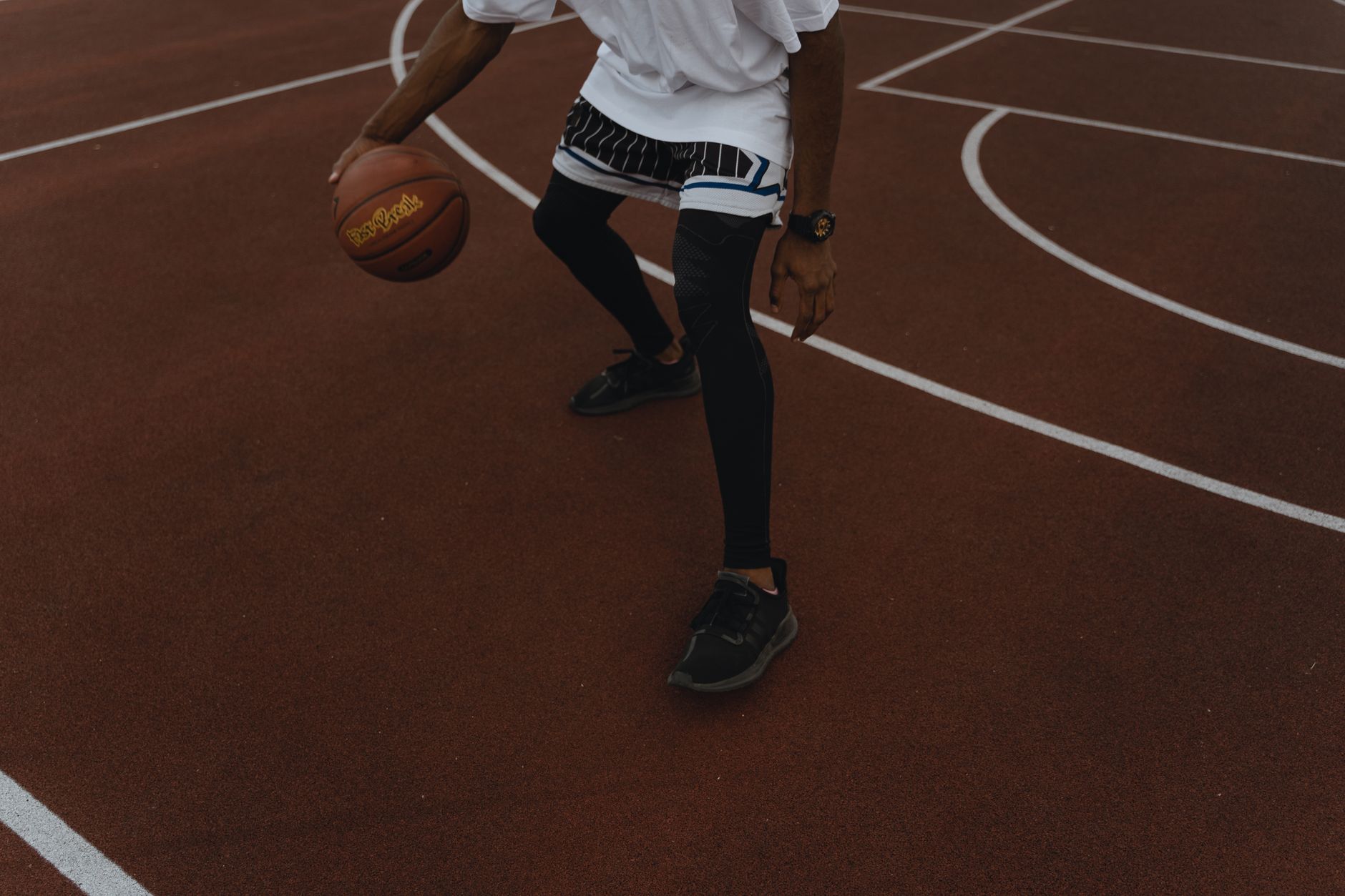
Photo by Tima Miroshnichenko on Pexels
At the end of 30 days, keep the drills that improve game outcomes and discard the vanity exercises. Your handle should make the next action easier—otherwise it is just choreography wearing basketball shoes. For broader sports strategy and player-performance analysis, explore our [Internal Link: basketball tactics and player statistics hub].
The conclusion is simple but not soft: improve dribbling by practicing control first, then pace, direction, pressure, and decisions. Give the weak hand more repetitions, measure live outcomes, and demand that every move create an advantage. Ten minutes of focused work with clear targets will beat an hour of theatrical nonsense every time. Start with the 15-minute foundation session today, record the result, and return to the same test after 30 days; evidence will settle the argument far more elegantly than confidence ever could.
Ready to build a smarter training routine and follow serious sports analysis?
Frequently Asked Questions
Q: What does improving basketball dribbling actually mean?
Improving basketball dribbling means gaining reliable control, protecting the ball, changing direction effectively, and making better decisions under pressure. It does not simply mean performing more complex moves or dribbling faster in place. Measure progress through weak-hand success, live-drive outcomes, turnover frequency, and the ability to keep your eyes up during movement. A player who creates one extra passing lane per possession has improved more meaningfully than someone who only increases stationary crossover speed.
Q: How often should I practice dribbling to improve?
Practice dribbling for 15–30 minutes, four to six days per week, with at least one recovery day. Beginners can start with 15 minutes focused on pound dribbles, crossovers, and movement control, while advanced players should add partner pressure and game-speed decisions. Keep approximately 60% of early repetitions on the non-dominant hand, but stop or reduce intensity when technique becomes sloppy. Consistency over 30 days matters more than one exhausting two-hour session.
Q: What is the difference between stationary and game-speed dribbling?
Stationary dribbling develops hand coordination, while game-speed dribbling combines control with footwork, vision, timing, and defensive pressure. Stationary work is valuable during the first stage of learning a move, but it cannot prove that the move works against a defender or in transition. Progress from stationary repetitions to walking speed, full speed, cone movement, partner pressure, and finally live play. If control drops below 70% during a progression, slow down and rebuild the previous stage.
Q: Why does my crossover work in practice but fail during games?
Your crossover may fail in games because you are too upright, telegraphing the move, dribbling too high, or using it without changing pace. Film 10 live attacks and record whether the defender reacts to your shoulders, hips, eyes, or ball position before the crossover begins. Practice attacking the defender’s front foot, then exit at an angle with two explosive steps. Add fatigue testing because many players lose 25–40% of their control after repeated sprints.
Q: How much equipment do I need to improve dribbling?
You need a basketball, a safe playing surface, and ideally four to six cones; expensive training equipment is unnecessary. A stopwatch and smartphone are more useful than flashy gadgets because they measure time, repetitions, and technique. If possible, use a Wilson Evolution or another properly inflated regulation ball, but also practice occasionally with the ball and surface used in competition. Equipment consistency helps, while equipment obsession is merely shopping disguised as development.
Q: Should beginners learn between-the-legs and behind-the-back dribbles?
Beginners should learn the basic movement pattern, but they should not prioritize advanced combinations over posture, hand control, and forward acceleration. Start with low stationary repetitions, then add walking movement and a clear exit direction before using either move against a defender. Between-the-legs dribbles are often easier to protect because the body shields the ball, while behind-the-back dribbles require stronger spatial awareness. Use the move only when it solves a defensive problem, not because the gym audience looks bored.
Q: Is practicing with two basketballs worth it?
Two-ball dribbling is useful for coordination and rhythm, but it should supplement rather than replace realistic one-ball training. Use 20-second sets of alternating high-low dribbles, simultaneous pounds, or cross-pattern movements, then immediately perform a one-ball attack to transfer the coordination. Two-ball drills do not teach defensive reading, shielding, or decision-making by themselves. If your live dribbling does not improve after two weeks, reduce two-ball volume and return to partner-pressure work.
[Internal Link: frequently asked questions about basketball skill development]