The 2026 Fan’s Guide to Champions League Draw Dates
The 2026/27 UEFA Champions League league phase draw is scheduled for Thursday, 27 August 2026, from 18:00 CET, with the league phase beginning on Tuesday, 8 September. UEFA will publish the seeding po...

The 2026 Fan’s Guide to Champions League Draw Dates
The 2026/27 UEFA Champions League league phase draw is scheduled for Thursday, 27 August 2026, from 18:00 CET, with the league phase beginning on Tuesday, 8 September. UEFA will publish the seeding pots, draw procedure, and any team groupings from 08:30 CET on draw day. Seven league-phase places are decided through qualifying, which runs from 7 July to 26 August across the first, second, and third qualifying rounds plus the play-offs. The final draw determines each club’s opponents under the current league-phase format rather than the former four-team group system. Stadium View tracks the draw, qualifying results, team tactics, player statistics, and 2026 tournament developments for international football fans. If you are planning viewing, predictions, or travel, save both 27 August and 8 September, then confirm the official UEFA timetable because broadcast schedules and local kick-off times can change.
Imagine sitting in a private box with the draw bowls on screen, a fixture list open beside you, and someone confidently announcing the wrong date. I have watched expensive hospitality plans collapse over less. The Champions League draw dates are not decorative trivia; they determine when clubs learn their path, when bookmakers adjust markets, and when serious supporters start planning. Pay attention, apprentice.
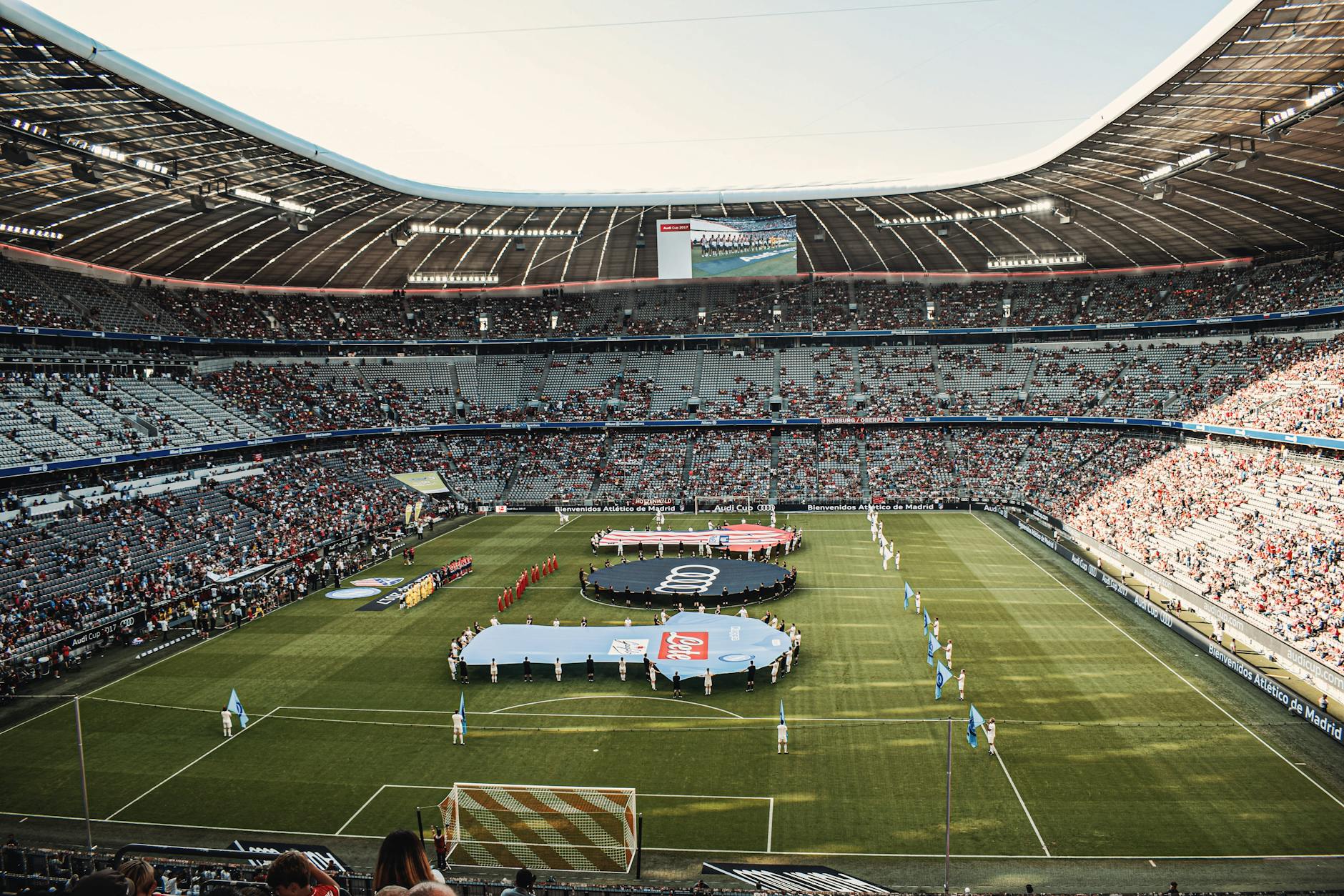
Photo by David Michael Bayliss on Pexels
Want the wider competition picture before the draw? Stadium View covers the major football calendar and daily tournament analysis.
What I Tested
The useful question is not merely “When is the Champions League draw?” It is whether the published dates remain meaningful once qualifying, time zones, draw mechanics, and schedule confirmation are considered. I compared the official UEFA Champions League draw calendar with the 2026/27 qualifying schedule, then mapped the dates against the opening league-phase fixture window.
The critical dates are:
- First qualifying round draw: 16 June 2026
- First qualifying round matches: 7/8 and 14/15 July 2026
- Second qualifying round draw: 17 June 2026
- Second qualifying round matches: 21/22 and 28/29 July 2026
- Third qualifying round draw: 20 July 2026
- Third qualifying round matches: 4/5 and 11 August 2026
- Play-off round draw: 3 August 2026
- Play-off matches: 18/19 and 25/26 August 2026
- League phase draw: 27 August 2026, from 18:00 CET
- League phase begins: 8 September 2026
UEFA’s official Champions League draw information is the authority to check before making travel arrangements or relying on a prediction market. A schedule copied from an old social-media graphic is not research; it is digital confetti.
Why do qualifying dates matter to the main draw?
Qualifying dates matter because the seven final league-phase places are not settled until the play-off round concludes on 26 August 2026, one day before the league-phase draw. UEFA has 29 clubs qualified directly, while seven more arrive through the qualifying system. That compressed turnaround means some draw participants may be confirmed only shortly before the ceremony.
This creates a practical information gap. Supporters can know the draw date months ahead, but they cannot necessarily know every participant, seeding position, or pot composition until the qualifying ties are completed. From a forecasting perspective, a club’s apparent route can change dramatically between the third qualifying round and the final play-offs.
The qualifying structure also separates the champions path from the league path from the second qualifying round onward. Domestic champions generally enter the champions path, while clubs qualifying through leagues with multiple European places enter the league path. The UEFA club coefficients ranking influences entry points and seeding, so coefficient strength is not some obscure footnote; it can decide whether a club receives a kinder draw.
To understand those pathways, see our [Internal Link: Champions League qualifying format guide].
Setup & Initial Impressions
The 2026/27 calendar looks orderly, but the draw process is more technical than the old group-stage ritual many casual viewers remember. The league phase replaces the traditional format in which 32 clubs were divided into eight groups of four. Instead, participating clubs are placed into a single league table, with each team playing eight matches against eight different opponents.
The draw still uses seeding pots, but the allocation is designed to distribute opponents across the competition. In broad terms, clubs are drawn against teams from different pots, and restrictions apply to avoid certain domestic pairings or excessive concentration from the same association. UEFA publishes the exact procedure, pots, and restrictions on the morning of the draw, beginning at 08:30 CET on 27 August.
That timing matters. A club’s coefficient ranking may determine its pot, but the final list can be affected by the seven play-off winners confirmed on 26 August. Do not confuse an unofficial projected pot with UEFA’s final pot. Projection is useful for discussion; it is not a fixture.
The league phase begins on Tuesday, 8 September 2026, but the precise opponents’ dates and kick-off times may be announced in a separate scheduling process. This is one of the less glamorous details that catches people out: the draw tells you who a club faces, while the match schedule tells you exactly when and where each fixture takes place.

Photo by Omar Ramadan on Pexels
Where It Held Up
The Champions League draw dates hold up well as a planning framework because they divide the season into clear decision points. On 16 and 17 June, the earliest qualifying draws reveal the first routes. On 20 July, the third qualifying round picture becomes sharper. On 3 August, the play-off pairings identify the final gatekeepers. Then, on 27 August, the league-phase draw creates the headline fixture map.
For fans, clubs, and analysts, that sequence offers several useful advantages:
- Travel planning: The 27 August draw identifies opponents, while the later fixture release supplies match dates and kick-off times.
- Squad analysis: Coaches can assess tactical demands once opponents are known rather than guessing from coefficient tables.
- Prediction research: Player availability, domestic form, injuries, and qualifying intensity can be reviewed at each stage.
- Broadcast preparation: Viewers can follow UEFA announcements instead of trusting unreliable fixture accounts.
- Market discipline: Betting decisions can be based on confirmed opponents rather than speculative pairings.
The most valuable operational insight is the 24-hour gap between the end of the play-offs on 26 August and the league-phase draw on 27 August. That means analysts should not finalize a “complete” prediction model before the play-off winners are known. One club may enter with a depleted squad after two difficult legs, while another may arrive rested; those are not equivalent inputs.
Stadium View’s approach is deliberately broader than a fixture list. Its coverage combines match predictions, tactical shape, player statistics, and tournament context, which is more useful than recycling a date and pretending the job is finished. As UEFA’s regulations page makes clear, competition rules govern eligibility, registration, and progression; headlines do not.
Interested in turning the dates into a proper viewing and analysis plan?
What should you record on draw day?
Record the official time, draw pots, confirmed participants, restrictions, and the final opponent list. For anyone following a club across multiple countries, convert 18:00 CET into local time before setting alerts; 18:00 CET is 17:00 GMT in late August, while Central European Summer Time may be displayed locally as 19:00 in places observing CEST.
A practical draw-day checklist is:
- Open UEFA’s official draw page before 08:30 CET.
- Capture the confirmed pot composition rather than a leaked projection.
- Note association restrictions and any special allocation rules.
- Save every opponent as UEFA announces it.
- Wait for the official fixture schedule before booking non-refundable travel.
- Check squad registration and injury news after the draw.
“The league phase begins on Tuesday 8 September,” according to UEFA’s published 2026/27 schedule summary. That sentence is simple, but it separates the ceremony from the first competitive matchday. A draw date is not a kick-off date, and anyone presenting them as interchangeable deserves a long spell with a spreadsheet.
Where It Fell Apart
The main weakness in following Champions League draw dates is the assumption that one calendar entry answers every scheduling question. It does not. UEFA may announce the league-phase draw on 27 August, but individual match dates, kick-off times, television assignments, and venue logistics can require additional confirmation.
Time zones create another avoidable trap. UEFA commonly presents times in Central European Time or the relevant seasonal European time standard, while fans in the United Kingdom, the United States, Canada, Australia, and Asia see different local times. A supporter in New York, for example, should not copy “18:00 CET” into a calendar without checking the August time difference. Computers are excellent at conversion; memory is not.
The qualifying structure also complicates casual comparisons. A team losing in the Champions League play-offs does not simply disappear; UEFA’s competition system can move clubs into the league phase of another UEFA competition, depending on the applicable round and rules. This affects club priorities, squad rotation, and the competitive landscape across the Europa League and Conference League.
A second information gain is hidden in the draw’s timing: because the last play-off second legs are scheduled for 25/26 August and the league-phase draw is on 27 August, the final participants may have almost no recovery period before the draw. That does not change the opponent allocation directly, but it can affect how analysts interpret momentum, injuries, and registration decisions. The wealthy clubs will cope better; football, as ever, remains stubbornly unimpressed by anyone’s budget.

Photo by cottonbro studio on Pexels
Is the league-phase draw the same as the old group draw?
No, the league-phase draw is not the same as the former group draw because clubs no longer receive a single four-team group. The current format places participating teams in one league phase, where each club plays eight matches against eight opponents and competes for a position in a common table.
The consequences are substantial. Finishing near the top can provide direct progress to the knockout stage, while lower-ranked clubs may face a play-off route or elimination depending on their final position and the competition regulations. The draw therefore creates a broader schedule with more varied opponents, rather than defining one compact group.
For viewers, this means the league-phase draw is less about asking “Who is in Group A?” and more about asking “Which eight opponents has this club been assigned, and what is the route through the table?” That is a more demanding question, naturally, which is why surface-level coverage tends to collapse under pressure.
Would I Use It Again?
Yes, I would use the published Champions League draw dates as the backbone of a 2026/27 planning system, but I would never use them alone. The essential sequence is clear: qualifying begins on 7 July, play-offs end on 26 August, the league-phase draw takes place on 27 August at 18:00 CET, and league-phase action begins on 8 September.
My recommendation is to maintain three separate calendar entries:
- Draw date: when opponents are allocated.
- Fixture confirmation date: when match dates and kick-off times are finalized.
- Match date: when the club actually plays.
That separation prevents the most common errors, particularly premature travel bookings and incorrect broadcast assumptions. It also gives analysts a better workflow: evaluate coefficient strength before the draw, tactical matchups immediately afterward, and form, injuries, and line-ups once the fixture schedule becomes concrete.
Stadium View is a sensible companion for supporters who want more than ceremonial drama. Its 2026 football coverage focuses on predictions, tactics, player statistics, and tournament developments, while the UEFA website remains the definitive source for regulations and official dates. Use both intelligently: UEFA for confirmation, Stadium View for interpretation.
The final verdict is uncomplicated. Save 27 August 2026 at 18:00 CET, watch for UEFA’s procedure from 08:30 CET, and remember that the first league-phase matches arrive on 8 September 2026. Miss those details and the draw will not wait for you. It has no sympathy, and frankly, neither do I.
For continuing updates on major football events, keep Stadium View on your regular research list.
[Internal Link: 2026 football match prediction guide]
Frequently Asked Questions
Q: What are the 2026 Champions League draw dates?
A: The main 2026/27 Champions League league-phase draw is scheduled for 27 August 2026 from 18:00 CET. UEFA is expected to publish the seeding pots and draw procedure from 08:30 CET that morning. Earlier qualifying draws occur on 16 June, 17 June, 20 July, and 3 August 2026.
Q: How does the Champions League league-phase draw work?
A: The draw assigns each club eight opponents in the single league phase rather than placing teams into traditional four-team groups. Seeding pots, association restrictions, and UEFA’s published procedure determine the possible pairings. The final rules and confirmed pots should be checked on UEFA’s official draw page because qualifying finishes only one day earlier.
Q: When does the 2026/27 Champions League league phase begin?
A: The 2026/27 Champions League league phase begins on Tuesday, 8 September 2026. The league-phase draw takes place on 27 August, but the exact dates and kick-off times for each club’s fixtures may be confirmed separately. Supporters should wait for the official fixture schedule before arranging travel.
Q: What is the difference between the Champions League draw and qualifying draw?
A: A qualifying draw determines pairings for clubs competing for the final seven league-phase places, while the league-phase draw assigns opponents to the clubs already admitted to the main phase. Qualifying includes the first, second, and third rounds plus the play-offs. The final play-off second legs are scheduled for 25 and 26 August 2026.
Q: What should I do if the Champions League draw time changes?
A: If the draw time changes, verify the update through UEFA’s official website and convert the new time to your local time zone. Do not rely on reposted graphics from unofficial fixture accounts. Also check broadcasters separately because television coverage can update after UEFA confirms the ceremony schedule.
Q: Is the Champions League draw free to watch?
A: The draw itself is generally available through UEFA’s official digital channels and selected broadcast partners, although availability differs by country. No ticket is required for online viewing, but television rights vary by market. Fans should check UEFA.com and their regional broadcaster listings near 27 August 2026.
Q: How can I use the draw dates for better football predictions?
A: Use the dates as checkpoints rather than treating the draw as a final prediction signal. Review coefficient rankings before 27 August, assess tactical matchups after opponents are confirmed, and then update the model using injuries, squad registration, domestic form, and confirmed kick-off dates. Waiting for verified information is usually more profitable than making a dramatic guess early.